

Disclosure: As an Amazon Associate, 1 Way Camping earns from qualifying purchases at no extra cost to you.
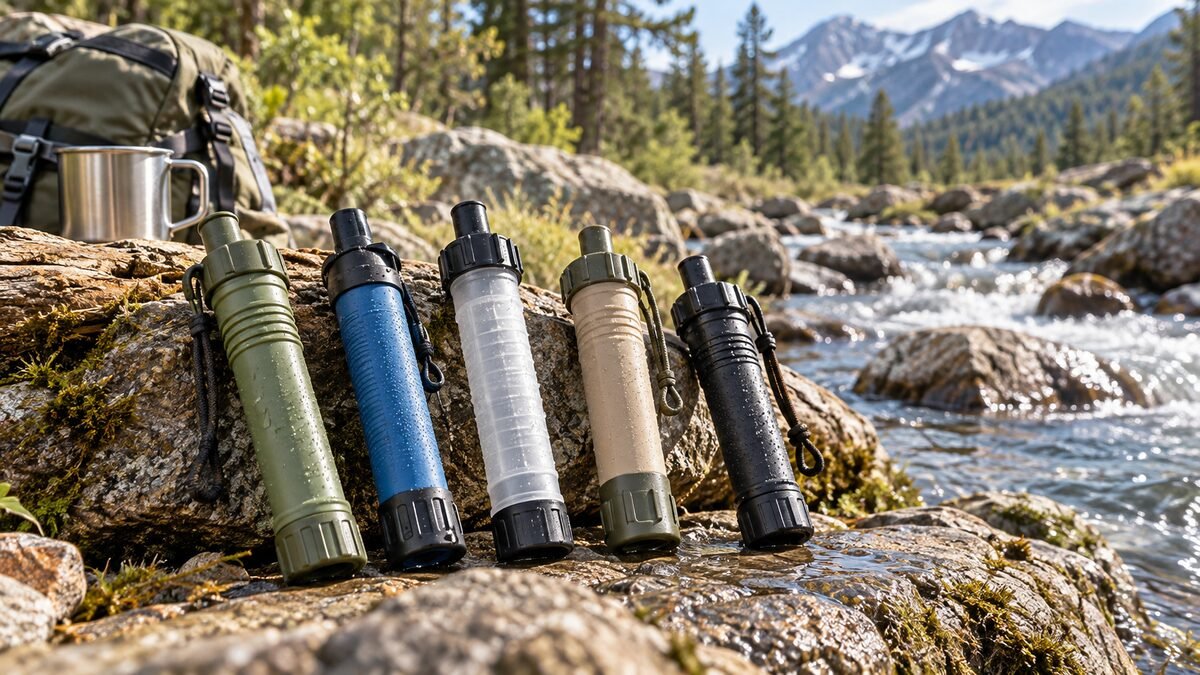
The Practical Survival water filter straws come in a five-pack intended for camping, hiking, travel, emergency kits, and household preparedness. A multi-pack makes it possible to place one filter in several backpacks or give each family member an individual unit. The product listing promotes a lightweight, reusable design and a claimed lifespan of up to 1,800 gallons per straw.
That capacity is attractive, but a water filter should never be judged by gallon rating alone. The verified pore size, contaminant-reduction claims, source-water quality, cleaning routine, and storage conditions are equally important. This review examines the practical advantages of the five-pack while explaining the safety limitations every buyer should understand.
Key Features at a Glance
| Product type | Reusable personal water filter straws |
|---|---|
| Quantity | Five filters per pack |
| Advertised lifespan | Up to 1,800 gallons per straw, according to the listing |
| Power needed | No batteries, charging, or electricity |
| Format | Direct-drinking personal filter |
| Best suited to | Emergency kits, hiking packs, vehicles, family preparedness, and travel backups |
Why a Five-Pack Can Be Useful
A single filter is easy to leave behind when equipment moves between a hiking pack, vehicle, and emergency bin. Five individual units let you distribute the equipment instead. One can stay with camping gear, another in a car kit, and the remaining filters can be assigned to family members or stored with emergency supplies.
Individual straws also reduce the need to share one mouthpiece. That is more convenient for a group and helps keep personal equipment organized. Each user should still learn how to prime, drink through, clean, and store the filter before an emergency occurs.
Portable, Pump-Free Operation
The main appeal of a filter straw is simplicity. There is no pump to operate and no battery to recharge. The user places the intake end in an appropriate water source or container and draws water through the filter. This direct-drinking format is compact and useful when carrying a reservoir or gravity bag would add unnecessary bulk.
However, a straw is less convenient when you need filtered water for cooking, washing, filling bottles, or serving several people. It also requires getting close enough to the source to drink or collecting water in a separate container. For a base camp, a gravity system may be easier; for individual backup use, the straw format is more portable.
Understanding the 1,800-Gallon Lifespan
The manufacturer advertises a capacity of up to 1,800 gallons per filter. Treat this as a maximum claim under specified conditions rather than a guaranteed real-world result. Fine sediment, algae, improper cleaning, heavy use, freezing damage, and poor storage can reduce flow or shorten service life. The current package instructions should explain cleaning, backflushing, and replacement indicators.
If the filter becomes difficult to draw through, do not assume that forcing more suction will restore safe performance. Clean it only by the approved method. A wet filter should also be protected from freezing because expanding ice can damage some microscopic filtration media without leaving visible cracks.
Water-Safety Limitations
Portable filter straws are not universal purifiers. The CDC states that most portable filters do not remove viruses. It also explains that an absolute pore size of 0.3 micron or smaller is needed to remove bacteria, while an absolute pore size of 1 micron or smaller can remove parasites such as Giardia and Cryptosporidium. Buyers should verify the exact absolute pore rating and any independent certification on the current product label rather than relying only on broad marketing language.
Do not assume that this product removes salt, fuel, pesticides, heavy metals, or other dissolved chemicals unless the manufacturer provides a specific verified claim. Avoid sources near industry, agriculture, mines, stagnant runoff, algal blooms, or obvious contamination. When viruses may be present, use an additional treatment method recommended by public-health authorities, such as proper boiling or disinfection.
Best Uses for the Practical Survival Five-Pack
- Family emergency kits: Give each person a separate backup filter.
- Hiking and day packs: Keep a compact treatment option with essential gear.
- Vehicle preparedness: Store one with emergency water and roadside supplies.
- Camping: Use as an individual backup to a larger gravity or pump system.
- Travel preparedness: Carry only where the filter’s verified performance matches the expected water hazards.
What We Like
- Five separate units are easy to distribute among people and kits.
- No electricity, batteries, or manual pumping is required.
- Compact format takes little space in emergency storage.
- Reusable design offers more utility than a single-use emergency item.
- The advertised 1,800-gallon capacity is generous for this product category.
What to Consider
- The capacity figure depends on water quality and correct maintenance.
- Direct drinking is less useful for cooking or filling clean-water containers.
- Virus removal should not be assumed.
- Chemical contamination and salt require specialized treatment.
- Users must protect the clean end from cross-contamination.
- Current micron ratings, certifications, and instructions should be checked before use.
How to Use and Store Filter Straws Responsibly
- Select the clearest available source and move away from obvious contamination.
- Let muddy water settle and prefilter sediment through a clean cloth when possible.
- Follow the manufacturer’s priming instructions before the first drink.
- Keep the outlet and mouthpiece away from untreated water and dirty hands.
- Clean or backflush the filter only as directed.
- Allow components to dry as instructed before long-term storage.
- Protect any damp filtration element from freezing.
- Replace the unit if it is damaged, improperly stored, or no longer performs normally.
Final Verdict
The Practical Survival reusable emergency water filter straws are most compelling as distributed backup equipment. A five-pack can cover several family members, vehicles, or backpacks without requiring charging or a shared pump. The claimed 1,800-gallon lifespan adds perceived long-term value, although actual performance depends on the source and maintenance.
This product is not a substitute for understanding water hazards. Before depending on it, confirm the current absolute pore size, tested contaminant reductions, certifications, cleaning procedure, and replacement guidance. With appropriate source selection and additional disinfection when needed, these straws can be a useful component of a broader camping and emergency-water plan.
Safety note: Always follow the current product instructions. For authoritative guidance, review the CDC’s advice on making water safe during an emergency.
Leave a Reply
You must be logged in to post a comment.