

Disclosure: As an Amazon Associate, 1 Way Camping earns from qualifying purchases at no extra cost to you.
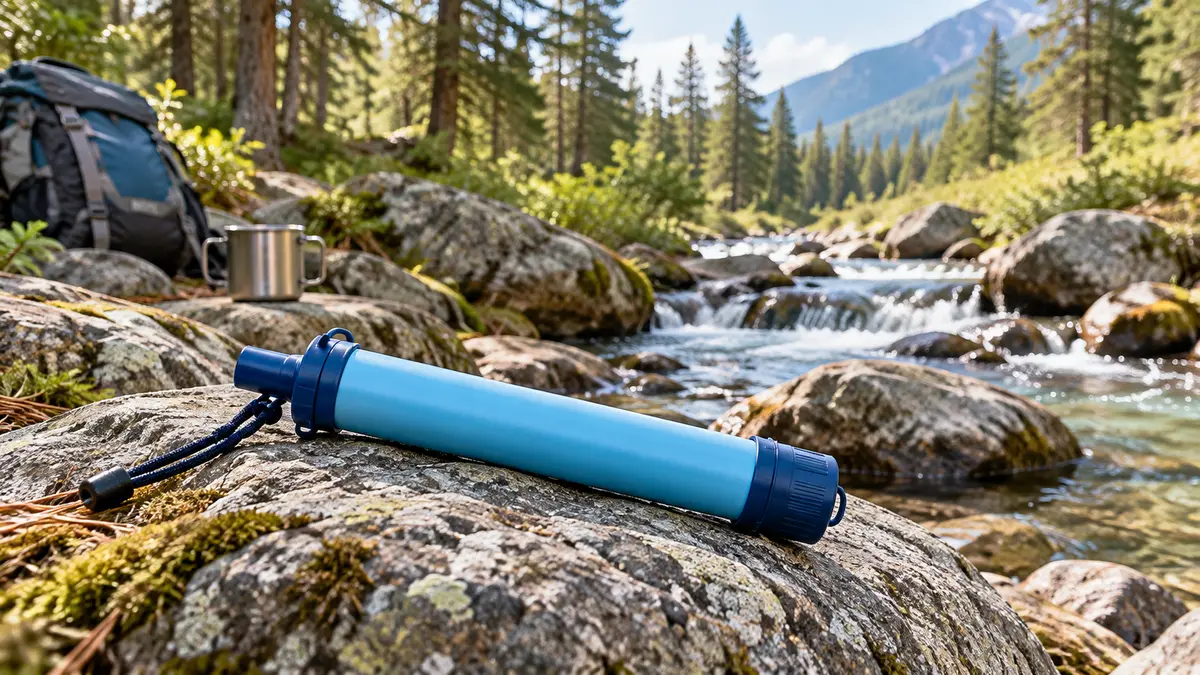
The LifeStraw Personal water filter is one of the most recognizable compact filtration tools for hiking, camping, travel, and emergency preparedness. This blue single-unit model uses a hollow-fiber membrane microfilter and requires no batteries, chemicals, or moving pump parts. You place the intake end in an appropriate water source and drink through the mouthpiece.
Its main strengths are low weight, simplicity, and a manufacturer-rated lifespan of up to 1,000 gallons or 4,000 liters. However, it is important to understand that the original LifeStraw is a personal filter, not a complete purifier. It is designed for bacteria, parasites, microplastics, silt, sand, and cloudiness, but it should not be relied upon for virus removal, seawater desalination, or every chemical contaminant.
LifeStraw Personal: Key Specifications
| Type | Personal membrane microfilter straw |
|---|---|
| Color and quantity | Blue, one unit |
| Pore size | 0.2 micron, according to LifeStraw |
| Rated lifespan | Up to 1,000 gallons / 4,000 liters |
| Manufacturer-stated protection | Bacteria, parasites, microplastics, dirt, sand, and cloudiness |
| Power required | None |
| Best for | Hiking, individual emergency kits, travel backup, and camping |
How the LifeStraw Personal Works
The filter uses suction to draw water through microscopic hollow fibers. Water passes through the membrane walls while contaminants larger than the filter’s pores are physically blocked. There are no tablets to measure and no electronic components to charge.
To use it, remove the caps, place the intake end in the selected water source or a separate container, allow the lower section to fill briefly, and draw water through the mouthpiece. The first pull can require more effort while the dry membrane becomes saturated. Always follow the current priming, drinking, cleaning, and storage instructions supplied with the exact model.
Filtration Performance
LifeStraw states that its 0.2-micron membrane removes 99.999999% of bacteria, 99.999% of parasites, and 99.999% of microplastics, along with silt, sand, and cloudiness. Those are manufacturer-published laboratory performance claims rather than personal testing by 1 Way Camping.
The 0.2-micron rating is small enough for common waterborne bacteria and protozoan parasites, but viruses are substantially smaller. The original LifeStraw Personal should therefore not be treated as a virus-removing purifier. This distinction matters in places with poor sanitation, sewage contamination, or heavy human activity near the watershed.
What the LifeStraw Does Not Do
This model is not designed to desalinate ocean water. It also should not be assumed to remove fuel, pesticides, dissolved heavy metals, industrial pollution, or every chemical contaminant. The original straw does not include the activated-carbon stage found in some filter bottles, so it is not primarily intended to improve chlorine taste or address dissolved organic chemicals.
Avoid water near mines, agriculture, industrial runoff, harmful algal blooms, or obvious chemical spills. If viruses may be present, the CDC recommends an appropriate additional treatment method. Source selection remains part of water safety even when a respected filter is used correctly.
Portability and Practical Use
The simple straw format is excellent for packing. It fits easily in a daypack, glove compartment, emergency bag, or travel kit and does not require separate fuel or electricity. For a solo hiker who wants a lightweight backup, that simplicity is the central advantage.
The format is less convenient when you need filtered water for cooking, washing, or filling bottles. Direct drinking also means getting close to the source or collecting untreated water in another container. A squeeze filter, bottle filter, or gravity system may be more practical for daily backpacking or group camps where larger volumes are needed.
Understanding the 1,000-Gallon Rating
LifeStraw rates the membrane for up to 1,000 gallons or 4,000 liters. This is a maximum service-life figure under suitable conditions, not a promise for every water source. Sediment-heavy water can reduce flow sooner. The membrane is designed to stop allowing water through when it reaches the end of its useful life, but damage or poor storage can require earlier replacement.
Prefilter cloudy water through a clean cloth and allow sediment to settle when possible. Clear the filter after use according to the manual. Once the membrane has been used, protect it from freezing; expanding ice can damage hollow fibers even when the housing still appears intact.
Best Uses
- Day hiking: A compact backup when natural water sources are available.
- Emergency kits: No battery, charging cable, or chemical shelf-life management.
- Camping: Useful as a personal backup to a higher-volume system.
- Vehicle preparedness: Easy to store with roadside and evacuation supplies.
- Travel: Appropriate only when its filtration capabilities match the expected hazards.
What We Like
- Compact, lightweight, and simple to operate
- No batteries, chemicals, or pump mechanisms
- 0.2-micron membrane filter
- Rated for up to 1,000 gallons / 4,000 liters
- Recognizable brand with published performance information
- Convenient for personal emergency preparedness
What to Consider
- Does not remove viruses
- Not designed for saltwater or every dissolved chemical
- Direct-drinking design is inconvenient for cooking and bottle filling
- Flow can slow with sediment and extended use
- A wet filter must be protected from freezing
- Each unit is primarily intended for one person at a time
Final Verdict
The LifeStraw Personal remains a strong option for hikers, campers, travelers, and households that want a simple individual emergency filter. Its small size, lack of batteries, 0.2-micron membrane, and long manufacturer-rated lifespan make it easy to add to almost any preparedness kit.
Its limits are equally important. This is not a virus purifier, desalination device, or broad chemical-treatment system. When used with an appropriate freshwater source and maintained according to LifeStraw’s instructions, it can be a useful defense against bacteria, parasites, microplastics, and suspended sediment. For uncertain sources, combine filtration with additional treatment recommended by public-health authorities.
Product specifications can change. Confirm the current Amazon listing and LifeStraw’s official product information before purchasing or using the filter.
Leave a Reply
You must be logged in to post a comment.