

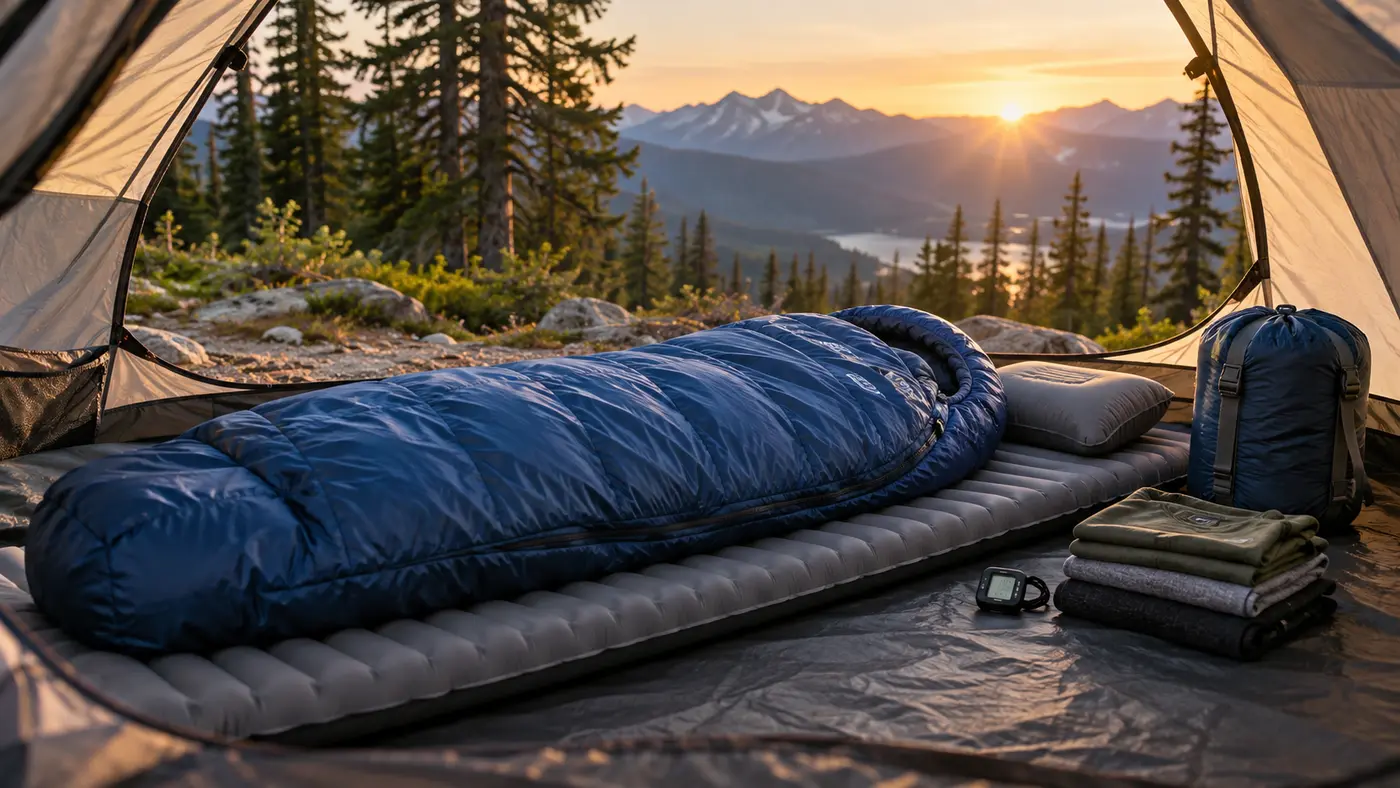
Choosing the right sleeping bag can make the difference between waking up rested and spending the night cold, cramped, or uncomfortable. The best option is not simply the warmest or most expensive bag. It is the one that matches your expected temperatures, sleeping style, body size, transportation method, and campsite conditions.
This guide explains how to choose a sleeping bag for car camping, backpacking, family trips, and cold-weather adventures. Use it to understand temperature ratings, insulation, shape, fit, weight, sleeping pads, and the features that matter most before you buy.
Quick sleeping bag checklist
- Estimate the lowest nighttime temperature of your trip.
- Choose a bag rated colder than the conditions you expect.
- Decide whether low weight or roomy comfort matters more.
- Select down or synthetic insulation for your climate and budget.
- Check the length, shoulder room, hip room, and zipper position.
- Pair the bag with a suitable insulated sleeping pad.
- Confirm the packed size will fit your backpack or vehicle.
1. Start with the lowest expected temperature
Temperature is the first factor to consider. Look at the forecast and the normal nighttime lows for your destination, then allow a safety margin for unexpected cold. A bag intended for 40°F nights may not be comfortable if the temperature drops close to freezing.
Many sleeping bags show several temperature numbers. A comfort rating generally describes the temperature at which a cold sleeper may rest comfortably. A lower-limit rating is usually associated with a warmer sleeper in a curled position. An extreme rating is a survival reference, not a comfort target. Labels and testing methods vary, so compare the manufacturer’s complete specifications instead of relying on one large number printed on the package.
If you sleep cold, are new to camping, or expect wind and humidity, choose additional warmth. Clothing, hydration, fatigue, tent ventilation, and the sleeping pad can all affect how warm you feel.
2. Match the bag to the season
- Summer bags: Lightweight choices for warm nights. They often use less insulation and may have a simple rectangular design.
- Three-season bags: Versatile options for spring, summer, and fall. These are a practical starting point for many campers.
- Winter bags: Heavily insulated models designed for freezing conditions. They commonly include a hood, draft collar, and draft tube along the zipper.
A winter bag can be too warm and bulky for mild trips, while a summer bag may be unsafe in freezing weather. Choose for the coldest conditions you realistically plan to encounter, not for every possible expedition.
3. Down vs. synthetic insulation
| Insulation | Advantages | Tradeoffs | Best for |
|---|---|---|---|
| Down | Excellent warmth-to-weight ratio, compresses very small, long useful life with proper care | Usually costs more and requires careful moisture management | Backpacking, lightweight travel, cold and relatively dry climates |
| Synthetic | More affordable, easier to care for, continues insulating better when damp | Usually heavier and bulkier for similar warmth | Car camping, humid destinations, families, value-focused buyers |
Down quality is often described by fill power. A higher fill-power number can provide more loft for its weight, but total warmth also depends on how much down is used and how the bag is constructed. Synthetic insulation is a dependable choice when condensation, rain, frequent washing, or a limited budget matters more than minimum pack size.
4. Choose the right sleeping bag shape
Mummy
A mummy bag follows the body’s outline and narrows toward the feet. The smaller interior space is efficient to warm and saves weight, making this shape popular for backpacking and cold conditions. The close fit can feel restrictive to people who move frequently at night.
Rectangular
A rectangular bag offers generous shoulder and leg room. It is comfortable for relaxed car camping and may unzip into a blanket. The extra space adds bulk and can take more body heat to warm.
Semi-rectangular
This shape balances warmth and freedom of movement. It is useful for campers who want more room than a mummy bag without carrying a full rectangular model.
Double sleeping bag
A double bag gives two campers a shared sleep space and works well on a compatible double pad or mattress. Check its actual width, zipper arrangement, and whether it can separate into two individual bags. Couples with very different warmth preferences may sleep better in separate bags.
5. Get the correct size and fit
Check the manufacturer’s maximum user height as well as shoulder and hip measurements. A bag that is too short can compress insulation around the feet and hood. A bag that is too narrow can restrict movement and compress loft. However, an excessively large bag leaves more air for your body to heat.
Big-and-tall sleepers should look for long or wide versions rather than assuming every adult bag will fit. Side sleepers may prefer additional knee and hip room. If possible, lie inside the bag while wearing the base layers you would use at camp.
6. Consider weight and packed size
For car camping, comfort, durability, and price can matter more than a few extra pounds. A roomy flannel-lined bag may be an excellent choice when it only travels from the trunk to the tent.
For backpacking, every ounce and every inch of pack space matters. Compare the actual packed dimensions and total weight, including the stuff sack. Avoid choosing an ultralight model solely for its small number if its temperature range, fit, or durability does not suit your trip.
7. Do not overlook the sleeping pad
A sleeping bag insulates mainly by trapping air in its loft. The insulation beneath your body is compressed while you lie on it, so the ground can draw away heat. An insulated sleeping pad is therefore a critical part of the sleep system.
Sleeping pads use an R-value to describe resistance to heat loss: higher values generally provide more insulation. Choose a pad appropriate for the season and conditions, and make sure its dimensions support your entire body. In cold weather, a warm bag on an inadequate pad can still leave you uncomfortable.
8. Features worth checking
- Hood: Helps reduce heat loss around the head in colder weather.
- Draft collar and zipper tube: Reduce cold air entering around the neck and zipper.
- Two-way zipper: Allows ventilation near the feet or torso.
- Anti-snag zipper design: Makes nighttime adjustments easier and protects the shell.
- Shell fabric: A durable, water-resistant outer fabric helps with tent condensation and normal campsite wear, but it does not make every bag waterproof.
- Lining: Smooth fabrics save weight, while cotton or flannel may feel cozy but add bulk and dry slowly.
- Footbox: Extra shape around the feet improves comfort and helps preserve loft.
- Storage and stuff sacks: A stuff sack is for transport; a large breathable sack is better for long-term storage.
9. Choose for the person and type of trip
Cold sleepers should prioritize a generous comfort margin, hood, draft control, and an insulated pad. Warm sleepers may value ventilation and a full-length zipper. Children need an appropriately sized bag and adult supervision; filling a large empty foot area with loose items is not a substitute for proper fit or safe sleep practices.
Couples should decide whether shared space or individual temperature control matters more. Backpackers should prioritize warmth-to-weight ratio and packed size. Car campers can focus on room, soft lining, easy washing, and value.
10. Common sleeping bag mistakes
- Using the extreme or survival rating as a comfort rating.
- Ignoring the sleeping pad and focusing only on the bag.
- Buying a bag that is too short, narrow, or unnecessarily oversized.
- Sleeping in damp clothing or breathing deep inside the bag, which adds moisture.
- Compressing the bag for months between trips.
- Assuming water-resistant fabric makes the bag fully waterproof.
11. Care and storage
After each trip, air out the sleeping bag until it is completely dry. Spot-clean small marks and follow the manufacturer’s washing instructions. Use the recommended detergent and washing method for down or synthetic insulation. Avoid aggressive heat that may damage fabric or fill.
Store the bag uncompressed in a large breathable sack or hang it in a dry space. Compression sacks are convenient during travel, but long-term compression can reduce loft and performance.
Frequently asked questions
What temperature rating should I choose?
Choose a comfort range colder than the lowest temperature you expect, especially if you sleep cold. Consider the complete sleep system, including your pad, clothing, shelter, and weather exposure.
Is down or synthetic better for camping?
Down is attractive for its warmth-to-weight ratio and compact size. Synthetic insulation is often less expensive, easier to maintain, and more forgiving in damp environments. The better choice depends on your climate, travel style, and budget.
Can I use one sleeping bag all year?
A versatile three-season bag can cover many trips, but one bag rarely performs perfectly in both hot summer weather and severe winter cold. Ventilation can extend its warm-weather use, while true winter conditions require appropriate cold-weather equipment.
Should I wear clothes inside a sleeping bag?
Clean, dry base layers and socks can help maintain comfort. Avoid wet or sweaty clothing, and do not wear so many tight layers that circulation or the bag’s loft is restricted.
Final recommendation
Start with temperature and pad insulation, then choose the shape, fit, and fill that suit how you travel. Car campers can prioritize spacious comfort and easy care, while backpackers should balance reliable warmth with low weight and compact packing. Once you know your requirements, compare our recommended sleeping bags for camping to see which models best match your plans.
Leave a Reply
You must be logged in to post a comment.