

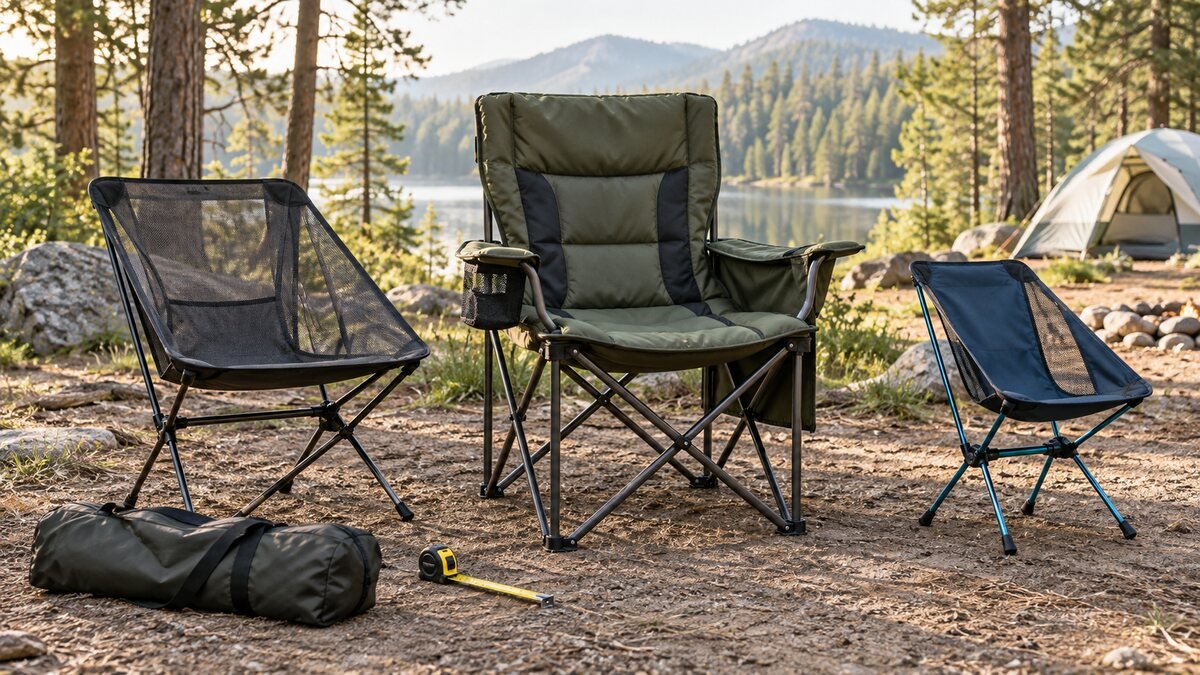
Choosing a camping chair looks simple until you compare seat heights, weight limits, frame styles, fabrics, and packed sizes. The right chair should fit your body, your transportation method, and the way you spend time outdoors. This complete guide explains how to choose a camping chair without paying for features you will not use.
A comfortable chair for car camping may be far too bulky for a hiking trip. Likewise, an ultralight stool may save space but become uncomfortable during a long evening around the fire. Start with your real use case, then evaluate support, comfort, portability, and durability.
Start With the Type of Camping You Do
Your camping style determines which compromises make sense. A chair carried only from the trunk to a campsite can prioritize padding and size. A chair carried for several miles must be light and compact, even if it provides less back support.
| Activity | Prioritize | Usually avoid |
|---|---|---|
| Car camping | Comfort, storage pockets, high back | Unnecessary ultralight premiums |
| Backpacking | Low weight, compact packed size | Heavy steel frames and thick padding |
| Fishing | Stability, cup holder, cooler pocket | Narrow feet on soft ground |
| Beach | Rust resistance, breathable fabric, wide feet | Materials that retain sand and moisture |
| Sports and events | Easy setup, carry strap, cup holder | Oversized models if walking far |
| RV or patio use | Comfort, upright posture, durability | Very low seats that are hard to exit |
Choose the Right Chair Style
Classic quad-fold chair
The familiar four-leg folding chair is versatile, quick to open, and commonly includes a carry bag and drink holder. It is a practical choice for casual camping and outdoor events. Models range from basic mesh chairs to oversized padded versions with reinforced frames.
Director-style chair
Director chairs have a firmer, more upright seat and usually fold from side to side. Their rigid arms can make standing easier, which may help taller adults or people with limited mobility. They often fold relatively flat but remain wide.
Compact collapsible chair
Compact chairs use lightweight poles and a removable fabric seat. They pack much smaller than traditional camp chairs and suit hiking or limited storage. However, they may sit low to the ground and require more assembly.
Rocking, reclining, and specialty chairs
Rockers and recliners add comfort but also weight, moving parts, and cost. Heated chairs can be valuable during cold-weather events, while canopy chairs provide shade. Buy a specialty feature only when it solves a problem you regularly encounter.
Understand Weight Capacity
A camping chair’s published capacity is the maximum load claimed by its manufacturer or seller. Choose a rating comfortably above the user’s body weight rather than operating near the limit. Extra capacity can provide useful structural headroom, but it does not automatically make a chair comfortable or durable.
Capacity ratings are difficult to compare when brands use different testing methods. Inspect the frame design, fabric attachment points, joints, and feet in addition to the number. Never allow two people to share a one-person chair, even when their combined weight is below its advertised limit.
Measure Seat Width, Depth, and Height
Overall chair dimensions can be misleading. The usable seat width between the frame or arm supports is what affects hip room. Seat depth determines thigh support, while the height from the ground affects how easily you can sit down and stand up.
- Seat width: allow room to sit naturally without pressure from the frame.
- Seat depth: the front edge should not press behind the knees.
- Seat height: higher seats are usually easier to exit; low seats can feel relaxed but may be difficult for some users.
- Back height: high backs support the shoulders and sometimes the head; short backs save weight.
If possible, compare these measurements with a chair you already find comfortable. This is more reliable than choosing solely from product photographs.
Padding Versus Breathability
Thick padding distributes pressure and feels comfortable during long periods of sitting. It is well suited to cool evenings, sports events, fishing, and vehicle-based camping. The drawbacks are added weight, larger packed size, and slower drying after rain.
Mesh panels improve airflow and allow water to drain. They are useful in warm or humid weather and easier to clean after the beach. A hybrid chair with padded edges and a mesh center can balance both needs. Our Amazon Basics camping chair review shows the advantages of a simpler mesh-based design.
Compare Frame and Fabric Materials
Most affordable camping chairs use powder-coated steel. Steel is strong and economical but heavier than aluminum and vulnerable to corrosion if its coating is damaged. Aluminum reduces weight and resists rust better, although it may cost more.
Seat fabrics are commonly polyester or Oxford cloth. Higher-denier materials are generally thicker, but construction quality, stitching, reinforcement, and exposure to sunlight also affect service life. Check whether stress points are double stitched and whether the fabric is securely attached to the frame.
Check Stability and Foot Design
A strong chair can still feel unstable on uneven or soft ground. Wide feet spread the load across sand, mud, or grass, while narrow feet can sink. A broad stance improves stability but increases the chair’s footprint. Always place every foot on firm, level ground and fully open the frame before sitting.
Avoid leaning back on two legs, standing on the seat, or using the armrests as steps. Keep chairs a safe distance from campfires because sparks and radiant heat can weaken synthetic fabric.
Evaluate Packed Size and Carrying Weight
Product pages often emphasize open dimensions but packed dimensions matter just as much. Measure your trunk, storage compartment, or backpack before purchasing. Remember that a two-chair package doubles the volume you must carry.
For short walks, a shoulder bag with a durable strap may be sufficient. For longer distances, look for a compact chair that fits inside or attaches securely to a backpack. Do not assume that “portable” means lightweight; almost every folding chair is marketed as portable.
Decide Which Accessories Are Useful
- Cup holder: useful for drinks, but confirm its diameter fits your bottle or insulated tumbler.
- Side pocket: keeps a phone, flashlight, book, or fishing tools accessible.
- Cooler pocket: convenient for events, although it adds bulk and can trap moisture.
- Headrest or lumbar support: valuable for long sitting sessions when positioned correctly.
- Carry bag: protects the chair and prevents the folded frame from opening during transport.
- Canopy or heating: useful in specific climates but adds weight, complexity, and cost.
How Much Should You Spend?
A basic chair can be enough for occasional outings. Spending more makes sense when you need a wider seat, reinforced frame, better padding, lighter materials, or a specialty feature. Price alone does not guarantee comfort, so compare measurements and construction before choosing.
Buying a two-pack can lower the cost per chair, but only if both seats meet your needs. For examples across several categories, consult our guide to the best camping chairs for 2026 after that comparison is published.
Camping Chair Safety Checklist
- Confirm the chair’s capacity and intended use.
- Open the frame completely before sitting.
- Place all feet on stable, level ground.
- Inspect fabric, stitching, joints, feet, and fasteners.
- Sit near the center without dropping into the seat.
- Keep the chair away from flames and hot cookware.
- Dry and clean the chair before storage.
Care and Maintenance
Brush off dirt and sand after each trip. Clean fabric with mild soap and water according to the manufacturer’s instructions, then allow it to dry completely. Avoid bleach or aggressive cleaners unless specifically approved. Remove mud and salt from joints and feet, and repair damaged parts only with components intended for the chair.
Store the chair indoors or in a dry compartment. Long-term exposure to ultraviolet light, rain, and temperature changes can weaken fabric and coatings even when the product is described as weather resistant.
Frequently Asked Questions
What is the most comfortable type of camping chair?
For many car campers, a wide padded chair with a high back is the most comfortable. Personal fit matters, so check seat width, depth, height, and lumbar shape rather than relying on padding alone.
Are heavier camping chairs stronger?
Not necessarily. Weight depends on materials and design. A well-engineered aluminum chair may be lighter than a steel model while still supporting its published capacity.
Are low camping chairs good?
Low chairs are compact and comfortable for beaches or relaxed seating, but they can be harder to enter and exit. They also provide less protection from cold or damp ground.
Can camping chairs be left outside?
Temporary outdoor use is expected, but permanent exposure shortens chair life. Dry and store the chair after use, especially following rain or beach trips.
Final Buying Advice
The best camping chair is the one that fits your body, activity, vehicle, and climate. Begin with seat measurements and capacity, then balance padding against packed size. Evaluate the frame, feet, fabric, accessories, and ease of carrying before comparing prices. A carefully chosen chair can improve every meal, campfire, and quiet morning outdoors.
Leave a Reply
You must be logged in to post a comment.