

Disclosure: As an Amazon Associate, I earn from qualifying purchases.
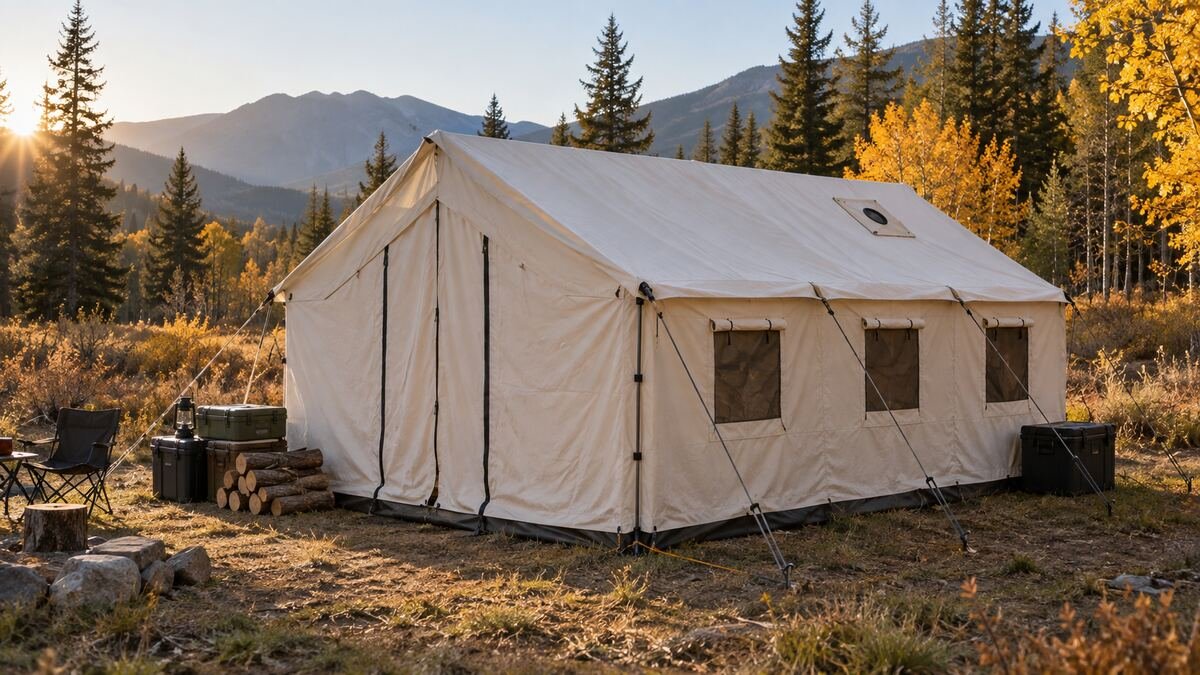
The Guide Gear 12×18 canvas wall tent is a substantial base-camp shelter designed for hunters, families, and outdoor groups who need more usable space than a typical recreational tent provides. Its rectangular floor, vertical walls, canvas construction, included frame, and stove-jack opening make it especially relevant for longer vehicle-supported trips.
This editorial review examines the tent’s publicly listed specifications, practical strengths, and important tradeoffs. We have not personally field-tested this model, so the analysis is based on current retailer information rather than hands-on experience.
Check the Guide Gear 12×18 canvas wall tent on Amazon
Guide Gear 12×18 Canvas Wall Tent Overview
With a footprint measuring approximately 12 by 18 feet, this wall tent offers about 216 square feet of floor area. Straight sidewalls create more practical standing and storage space than sloping dome-tent walls, allowing campers to arrange cots, tables, chairs, and equipment around the interior.
The Amazon listing identifies it as a four-person, four-season-style camping and hunting tent. Capacity ratings should always be treated as estimates: the comfortable number of of occupants depends on cot size, stove clearances, luggage, and the amount of living space the group expects.
Key Features
- Large 12 x 18 ft rectangular footprint
- Heavy canvas body and canvas floor
- Included aluminum frame
- Advertised four-person occupancy
- Three windows for light and ventilation
- Six interior storage pockets
- Stove-jack opening for compatible equipment
- Weather-resistant, multi-season positioning
- Freestanding wall-tent design with stakes and guying hardware
Canvas Construction and Interior Comfort
Canvas is valued in base-camp shelters because it feels substantial, blocks light effectively, and can provide a more comfortable interior climate than thin synthetic fabric. When ventilation is managed correctly, breathable canvas may also help reduce the clammy feeling associated with condensation.
That comfort requires maintenance. Canvas must be completely dry before storage because trapped moisture can encourage mildew, odors, and fabric damage. Dirt should be brushed away gently, and cleaning products should only be used when they are approved for the material.
Usable Space and Wall-Tent Layout
The rectangular shape and upright walls are major advantages for extended stays. Instead of losing perimeter room to steep slopes, campers can place cots and storage closer to the sides. The wide floor also makes it possible to separate sleeping, cooking-equipment storage, and entry zones.
Do not plan occupancy by floor dimensions alone. If a tent stove is used, the manufacturer’s required clearances can reduce usable space considerably. Keep sleeping bags, clothing, fuel, and other combustible items far from hot equipment.
Frame and Setup Considerations
This is not an instant tent. A 12 x 18 ft canvas shelter and its frame require organization, a large level site, and preferably more than one adult for setup. Before traveling, identify each frame component and practice assembling the structure in a controlled location.
Start with well-drained ground that is free of sharp debris. Square the frame and footprint, tension the canvas evenly, and use the appropriate stakes and guylines. Recheck tension after the fabric settles and whenever weather conditions change.
Ventilation and Weather Protection
The three listed windows can provide natural light and cross-ventilation. Even during cold weather, some airflow is necessary to manage interior moisture and maintain safer air quality. Never seal a canvas shelter completely while people are inside.
The listing describes the tent as weather resistant and waterproof, but performance depends on correct pitching, canvas condition, seam construction, anchoring, and maintenance. Test the shelter before relying on it in remote locations. Avoid exposed campsites and never treat a recreational tent as protection from dangerous winds, flooding, lightning, or falling branches.
Stove-Jack Safety
A stove-jack opening can support cold-weather base camping when paired with compatible equipment, but it does not make every stove safe to use. Fire and carbon-monoxide hazards require careful planning.
- Follow both the tent and stove manufacturers’ instructions.
- Use only a properly sized stove and approved chimney components.
- Maintain all specified clearances from canvas and gear.
- Install a spark arrestor when required.
- Provide continuous ventilation.
- Keep a suitable fire extinguisher and carbon-monoxide detector nearby.
- Never leave a burning stove unattended.
Local campground and fire regulations may prohibit tent stoves during certain seasons. Confirm the rules before traveling.
Advantages
- Large, highly usable rectangular interior
- Vertical walls accommodate cots and camp furniture
- Canvas construction suits extended base-camp use
- Included frame simplifies matching components
- Windows and pockets add practical convenience
- Stove-jack provision supports properly planned cold-weather setups
Possible Limitations
- Heavy and bulky compared with synthetic family tents
- Not suitable for backpacking
- Setup requires time, space, and preferably several people
- Canvas must be dried and stored carefully
- A large campsite may be difficult to find
- Stove use introduces serious safety responsibilities
Who Is This Tent Best For?
The Guide Gear wall tent is best suited to vehicle-accessible hunting camps, family basecamps, seasonal outdoor setups, and groups staying in one place for several days. It appeals to campers who prioritize durable-feeling materials, standing room, furniture-friendly walls, and a cabin-like environment.
It is a poor match for hikers, quick weekend trips with frequent campsite changes, small developed tent pads, or campers who lack adequate storage space at home. A lighter synthetic cabin tent will usually be more convenient for casual trips.
What to Check Before Buying
- Package contents: Confirm that the current variation includes the complete frame, stakes, guylines, storage components, and expected accessories.
- Vehicle capacity: Verify the current packed dimensions and total shipping weight.
- Campsite size: Allow room beyond the 12 x 18 ft floor for stakes and guylines.
- Occupancy: Draw a floor plan for cots, storage, walking paths, and any stove clearances.
- Weather preparation: Inspect the canvas, seams, zippers, frame, and anchors before every trip.
- Recent customer feedback: Look for consistent reports about setup, leaks, frame fit, and durability.
Final Verdict
The Guide Gear 12×18 canvas wall tent is a specialized shelter for campers who want a spacious and practical base camp rather than a lightweight portable tent. Its rectangular layout, included frame, canvas construction, and stove-jack provision make it attractive for hunting camps and extended outdoor stays.
Its benefits come with real commitments: transportation, setup labor, a large campsite, careful drying, and strict stove safety. Campers prepared for those responsibilities may appreciate the room and traditional wall-tent experience it provides.
View current availability and specifications on Amazon
Product specifications, availability, and included components can change. Always verify the current retailer information and applicable fire regulations before purchasing or using a tent stove.
Leave a Reply
You must be logged in to post a comment.