

Disclosure: As an Amazon Associate, 1 Way Camping earns from qualifying purchases at no extra cost to you.
The Practical Survival gravity water filter is a six-piece, pump-free filtration kit designed for camping, emergency preparedness, group trips, and other situations where you need to process water without electricity. Its headline feature is a manufacturer-claimed service capacity of up to 1,800 gallons. That sounds impressive, but capacity is only part of the decision: water source, maintenance, flow rate, verified pore size, and the organisms a filter is rated to remove matter just as much.
Practical Survival Gravity Water Filter: Quick Overview
| Type | Gravity-fed outdoor water filtration system |
|---|---|
| Kit | Six-piece configuration, according to the product listing |
| Claimed filter life | Up to 1,800 gallons under the manufacturer’s stated conditions |
| Power required | No electricity or manual pumping during filtration |
| Best for | Base camps, family camping, emergency kits, and small groups |
| Main limitation | Exact contaminant reduction depends on the verified filter rating and source water |
How the Gravity System Works
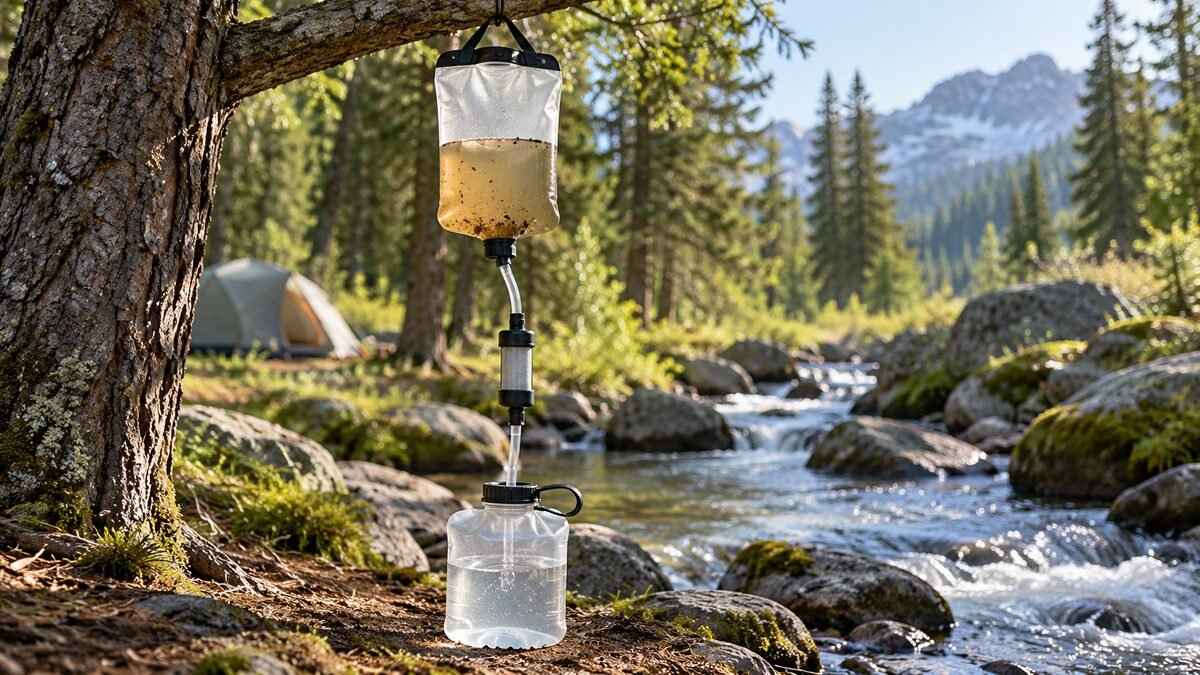
A gravity filter uses elevation instead of a hand pump. You fill the dirty-water reservoir, hang it above the clean container, connect the hose and filter in the correct direction, and let gravity pull water through the filter media. This setup can be more convenient than squeezing a bottle or pumping each liter, especially when several people need water for drinking and cooking.
The tradeoff is speed. Gravity systems are rarely instant, and flow can slow as sediment accumulates. Clearer source water, correct hose positioning, sufficient height between reservoirs, and regular cleaning all help. If the source is silty, allow sediment to settle or prefilter it through a clean cloth before using the main filter.
What the Six-Piece Format Means in Practice
The listing describes this as a six-piece kit. The practical appeal is an integrated system rather than a filter element sold alone: a reservoir, tubing, connectors, a filtration component, and the accessories needed to route water into a clean container. Buyers should still check the current “what’s included” section before ordering because sellers can revise bundles, colors, or accessories without changing the core product page.
For camp use, keep every clean-side component separate from untreated water. Mark the clean hose or cap if needed, avoid letting the outlet touch the ground, and dry the system before long-term storage. Cross-contamination can undo otherwise careful filtration.
Understanding the 1,800-Gallon Claim
The advertised 1,800-gallon figure should be treated as a maximum service-life claim, not a guarantee for every trip. Mud, algae, fine silt, freezing damage, improper storage, and insufficient cleaning can reduce useful life or flow. A filter may also become inconveniently slow before reaching its theoretical gallon rating.
Follow the manufacturer’s cleaning and replacement instructions, and never allow a wet hollow-fiber-style filter to freeze unless its manual explicitly says the element remains safe. Ice expansion can damage microscopic filtration pathways even when the housing looks normal.
Water Safety: What a Camping Filter May Not Remove
This is the most important part of the review. Do not assume that clear-looking water is safe or that every portable filter removes the same hazards. The CDC explains that most portable filters do not remove viruses; an absolute pore size of 0.3 micron or smaller is needed to remove bacteria and parasites, while a 1-micron absolute filter may remove parasites but not all bacteria. Filters also should not be assumed to remove dissolved chemicals, fuel, pesticides, heavy contamination, or salt unless the manufacturer provides a specific verified rating.
Before relying on this kit, verify the exact absolute pore size, test standard, and contaminant-reduction claims printed on the current package or manual. When viral contamination is possible, the CDC recommends additional disinfection or boiling as appropriate. Avoid water near mining, agriculture, industrial runoff, stagnant scum, or obvious chemical pollution; ordinary backcountry filters cannot make every source safe.
Where This Filter Makes the Most Sense
- Base camping: Hang the reservoir and process water while you organize camp or prepare food.
- Small groups: A gravity setup reduces repeated pumping when several campers share one water source.
- Emergency preparedness: No electricity is needed, although safe source selection and backup disinfection remain essential.
- Vehicle camping: The system is easier to carry when pack weight is less critical.
- Backpacking: Potentially useful for groups, but solo hikers should compare packed size and weight with lighter squeeze filters.
Pros and Cons
Pros
- Pump-free operation
- Convenient for camp and group use
- Six-piece kit format
- Advertised capacity up to 1,800 gallons
- No battery or charging requirement
Cons
- Flow depends on height, cleanliness, and maintenance
- Maximum life varies with water quality
- Virus removal should not be assumed
- Does not automatically address chemical pollution
- Requires careful clean-side hygiene
Setup and Maintenance Tips
- Choose the clearest available moving-water source and collect upstream from obvious contamination.
- Confirm the filter’s flow direction before connecting the tubing.
- Hang the dirty reservoir securely above the clean container.
- Prime or flush the filter exactly as the manual directs before drinking.
- Keep dirty and clean components from touching.
- Backflush or clean the element at the recommended interval.
- Drain and dry the system for storage, and protect a damp filter from freezing.
Final Verdict
The Practical Survival gravity water filter is most appealing to campers who want a hands-off, electricity-free way to process water for more than one person. Its six-piece format and claimed 1,800-gallon capacity make it look well suited to base camps and emergency supplies. However, buyers should confirm the current micron rating, independent certifications, flow specifications, included parts, and replacement-filter availability before making it their only treatment method.
Used with an appropriate source, correct maintenance, and additional disinfection when conditions demand it, this style of gravity system can be a convenient part of a broader camp-water plan. It should not be treated as permission to drink from any source.
Safety note: Always follow the manufacturer’s current instructions. For authoritative guidance, see the CDC’s recommendations for treating water while hiking and camping.
Leave a Reply
You must be logged in to post a comment.