

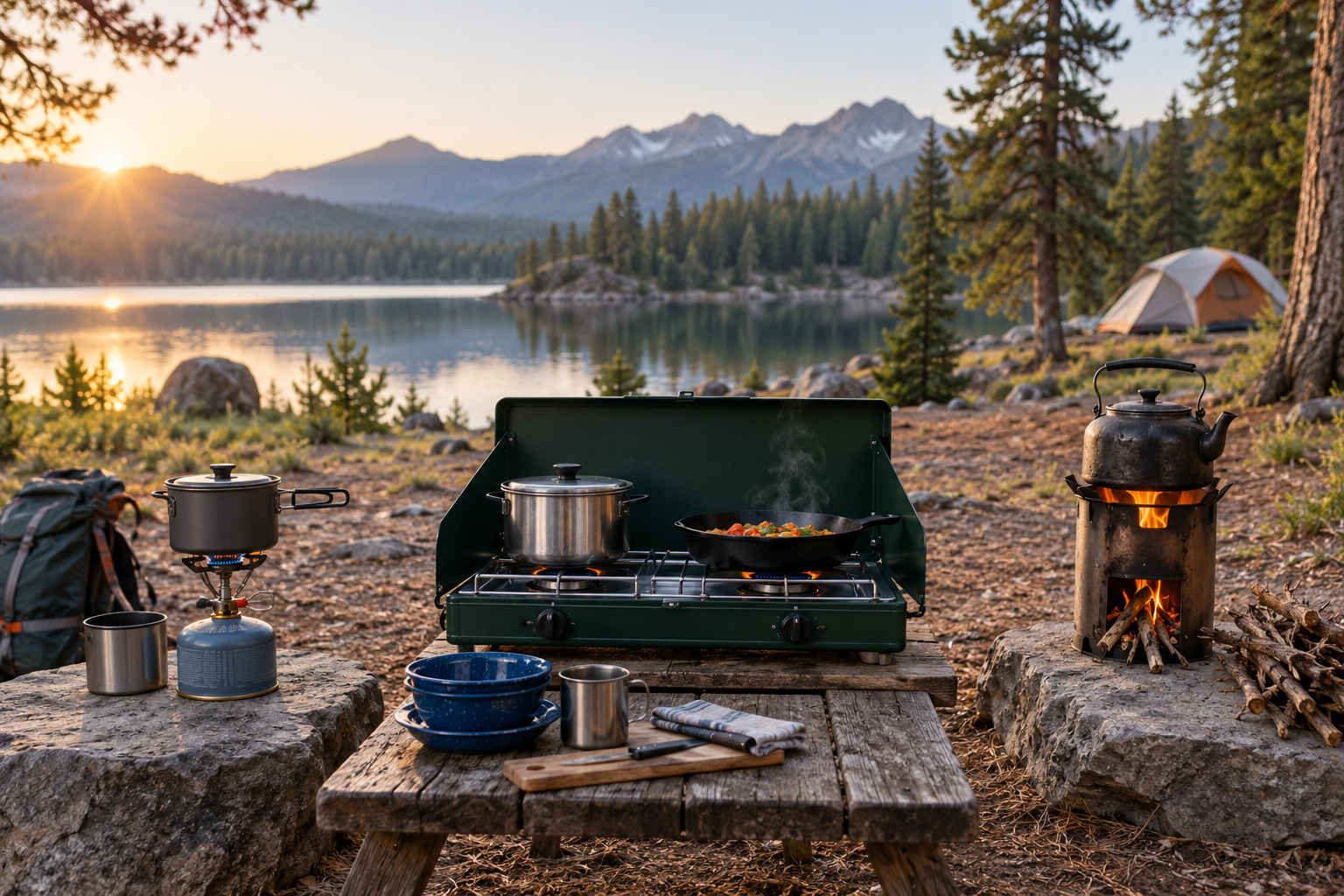
Choosing a camping stove is easier when you start with the trip instead of the product. A backpacker carrying every ounce needs something different from a family preparing breakfast at a drive-in campground. Weather, group size, fuel availability, cookware, local regulations, and menu complexity all shape the right decision.
This complete guide explains how to choose a camping stove for backpacking, car camping, RV travel, emergency preparedness, and outdoor group cooking. It also covers fuel types, burner count, BTUs, ignition, stability, maintenance, and essential safety.
Start With Your Camping Style
Backpacking and Hiking
Backpackers usually prioritize low weight, compact dimensions, and fast boiling. A small canister stove can support one or two people who prepare dehydrated meals, coffee, or simple one-pot food. Integrated stove systems add wind protection and efficiency, but they can cost more and may limit cookware choices.
Stability matters as much as weight. Tiny burners place the pot high above a narrow fuel canister. Therefore, wide cookware and large meals can become awkward. Choose a model with strong pot supports and cook on level ground.
Car Camping
Car campers can carry a larger tabletop stove, heavier cookware, and more fuel. Two burners allow a pot and skillet to run at the same time. Wind panels, separate flame controls, and push-button ignition also make a family camp kitchen easier to manage.
A portable grill may be better when burgers, chicken, and vegetables dominate the menu. However, a traditional stove gives pots and pans more support. Some campers bring both systems on longer trips.
RV Travel and Tailgating
RV travelers and tailgaters often value cooking area, comfortable working height, wheels, and folding stands. A stand-up propane grill reduces the need for a separate table. Nevertheless, check the packed dimensions and weight before buying. Cargo compartments can fill quickly.
Emergency and Off-Grid Cooking
An emergency stove should use fuel that your household can store safely and rotate. Dual-fuel models add flexibility by accepting butane and propane. Liquid-fuel stoves can perform well in demanding conditions, while wood-burning rocket stoves reduce dependence on commercial fuel.
Still, never treat a camping stove as an indoor appliance. During an outage, use fuel-burning equipment outdoors and far from doors, windows, tents, garages, and vehicles.
Understand the Main Fuel Types
Propane
Propane powers many tabletop stoves, grills, and high-pressure burners. It offers adjustable heat, familiar connections, and broad availability. One-pound cylinders suit short trips, while larger refillable tanks can reduce waste and operating cost when the manufacturer approves the proper hose and regulator.
Propane equipment is often heavier than a backpacking canister system. Cylinders also require upright, protected transport and outdoor storage. Never improvise an adapter or regulator.
Butane
Butane cassette stoves are compact and simple to operate. The canister installs inside a side compartment, which creates a low tabletop profile. This design works well for mild-weather camping and emergency outdoor cooking.
However, butane loses pressure in cold conditions more quickly than propane. A stove must also include proper canister alignment and safety features. Never heat, refill, or alter a disposable canister.
Isobutane-Propane Canisters
Threaded backpacking canisters combine convenience with low weight. They attach quickly and allow good flame adjustment. For most three-season backpacking trips, they provide the simplest balance of performance and packability.
The main drawbacks are canister waste, uncertainty about remaining fuel, and weaker performance in severe cold. In addition, airline rules prevent passengers from carrying fuel canisters.
Liquid Fuel
Liquid-fuel stoves use refillable bottles and can perform well during winter or extended expeditions. Some models accept more than one fuel, which helps international travelers. They also make fuel quantity easier to measure.
On the other hand, these stoves require pumping, priming, maintenance, and careful handling. They can flare during startup. Therefore, beginners should practice outdoors before relying on one in remote terrain.
Wood, Twigs, and Biomass
Rocket stoves and twig burners use dry natural fuel instead of a cylinder. They can support off-grid cooking and reduce the fuel carried from home. Larger versions may also include a grate or griddle.
Yet biomass stoves produce smoke, soot, sparks, and ash. They demand constant attention and dry fuel. More importantly, local burn bans may prohibit them even when gas stoves remain allowed. Always check the current rules before leaving home.
How Many Burners Do You Need?
A single burner is enough for boiling water, heating soup, or preparing one-pot meals. It also packs more easily and uses less table space. However, the cook must finish one task before starting another.
Two burners allow simultaneous cooking. For example, one side can heat coffee while the other prepares eggs. This layout is ideal for couples, families, and campers who use separate pots and pans.
Three burners or multiple grill zones make sense for group meals and temperature-sensitive grilling. They add weight, size, and fuel consumption. Therefore, buy extra cooking zones only when your menu will use them.
What Do BTUs Really Tell You?
BTU stands for British Thermal Unit. On a camping stove, the rating describes potential heat output per hour. A larger number can support faster boiling or larger cookware, but it does not automatically guarantee better cooking.
Burner shape, wind protection, pot distance, regulator quality, and flame adjustment affect real performance. A 20,000-BTU burner with poor wind protection may waste more heat than a lower-output system with an efficient heat exchanger.
Low-flame control is equally important. Pancakes, sauces, rice, and delicate foods can burn when a stove only performs well at maximum output. Look for independent controls and review the manufacturer’s simmering guidance.
Stability and Cookware Compatibility
Check the maximum recommended pot diameter and weight. A small backpacking stove should not support a large stockpot. Conversely, a heavy high-pressure burner may be unnecessary for a small titanium mug.
Wide feet, a low center of gravity, and firm pot supports improve stability. Set every stove on a level, noncombustible surface. Also, keep handles turned inward so a person cannot knock the cookware over.
Wind and Weather Performance
Wind can lengthen cooking time, increase fuel use, and push flames toward sensitive components. Tabletop stoves often include side panels. Backpacking systems may place the burner close to the pot or use an integrated heat exchanger.
Never wrap a fuel canister or hose with an improvised windscreen. Trapped heat can raise fuel pressure dangerously. Use only the wind protection approved for that stove.
Cold weather changes fuel performance. Butane becomes unreliable sooner than propane, while some liquid-fuel systems remain suitable for deep winter. Consult the stove manual for operating limits rather than relying on a general temperature claim.
Ignition Systems
Piezo and electronic igniters provide convenient push-button lighting. However, dirt, moisture, electrode damage, and age can cause failure. Always carry waterproof matches or a long lighter as a backup.
Manual ignition has fewer parts but places the user closer to the burner. Follow the exact lighting sequence in the manual. If ignition fails, close the fuel control and allow unburned gas to disperse before trying again.
Fuel Planning
Fuel consumption depends on burner output, flame setting, wind, temperature, altitude, cookware, and food. Begin with the manufacturer’s estimated burn time. Then add a safety margin based on the trip length and menu.
Boiling water uses fuel differently from simmering a stew for an hour. A lid, wind protection, and preplanned meals improve efficiency. For group trips, divide fuel among responsible adults so one lost container does not end every hot meal.
Essential Camping-Stove Safety
- Operate camping stoves and grills outdoors only.
- Never use them inside a tent, vehicle, RV, garage, or enclosed shelter.
- Keep the stove away from dry grass, branches, tents, and other combustible materials.
- Check hoses, seals, regulators, and fuel connections before ignition.
- Test gas connections with the method recommended by the manufacturer—never with a flame.
- Do not leave a burning stove unattended.
- Keep children and pets outside the cooking area.
- Allow every component to cool before disconnecting fuel or packing the stove.
- Follow current campsite rules, fire restrictions, and permit requirements.
Carbon monoxide is colorless and odorless. Opening a tent door or window does not make indoor stove use safe. In addition, charcoal continues producing carbon monoxide even when it appears to be cooling.
Cleaning and Maintenance
Clean spilled food before it hardens around the burner. Remove crumbs, grease, and insects from accessible areas, but do not enlarge burner ports with a sharp object. Inspect O-rings, hoses, and connectors for wear.
Dry cast-iron grates and season them when required. Empty cold ash from biomass stoves according to local rules. Finally, store the appliance in a dry place and keep fuel containers separately in the approved location.
Camping Stove Buying Checklist
- What type of camping will you do most often?
- How many people will you feed?
- Will you boil water, simmer, grill, or use a griddle?
- How many burners does the menu require?
- Which fuel is available at your destination?
- Will cold weather affect that fuel?
- Does the stove fit your cookware safely?
- How much packed space and weight can you carry?
- Does it include wind protection and reliable flame control?
- Can you obtain compatible replacement parts?
- Are wood or charcoal stoves permitted where you camp?
- Have you practiced setup, ignition, shutdown, and cleaning?
Final Advice
The best camping stove is the one that matches your travel style, menu, group size, and fuel plan. Backpackers usually benefit from a compact canister system. Families often need two propane burners, while grill-focused campers may prefer a stand-up model. High-pressure burners suit large pots, and rocket stoves serve specialized off-grid needs.
Do not choose by BTUs alone. Prioritize stability, low-flame control, safe fuel connections, and cookware compatibility. Most importantly, learn the stove before the trip and use it outdoors with the clearances required by its manufacturer.
Leave a Reply
You must be logged in to post a comment.