

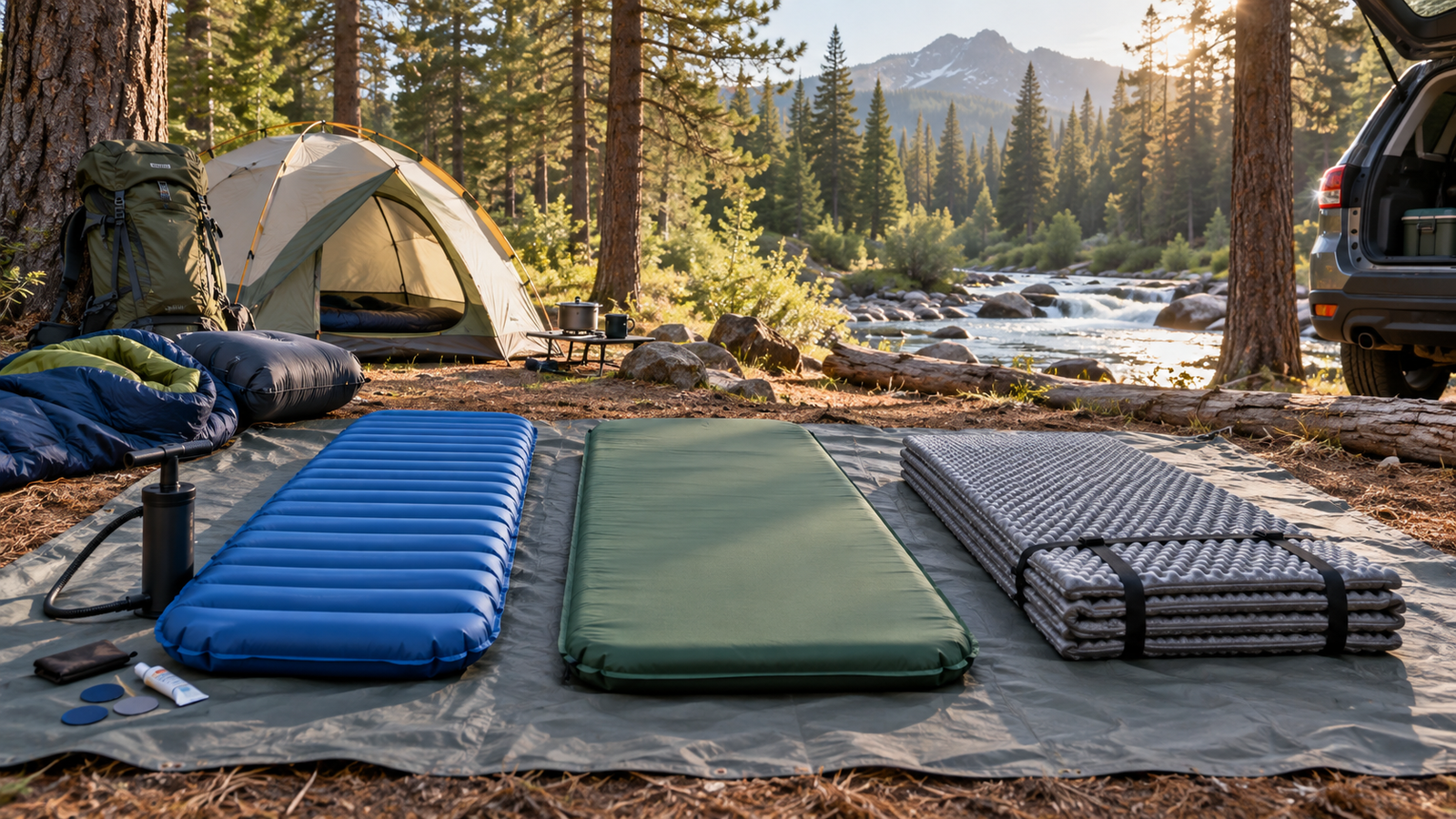
Knowing how to choose a camping mattress is essential for sleeping comfortably and safely outdoors. The right option must support your body, insulate you from the ground, fit your tent or vehicle, and still be practical to transport.
However, the ideal mattress is different for a backpacker, a family tent camper, an RV traveler, and someone sleeping inside an SUV. This guide explains the main types, measurements, insulation ratings, comfort features, and common mistakes so you can select a sleep system with confidence.
Start with the way you camp
Your transportation determines how much weight and bulk you can accept. Before comparing thickness or materials, decide which of these situations describes most of your trips.
Backpacking
Backpackers carry every ounce, so packed size and weight come first. A lightweight air pad generally offers the best cushioning-to-weight ratio. Models with a built-in foot pump and pillow, such as the Oramoose ultralight sleeping pad, reduce the number of separate accessories in the pack.
Tent and car camping
When the vehicle is close, comfort can take priority over weight. Thick self-inflating pads and foam-and-air mattresses offer better pressure relief and stability. A four-inch model can be especially useful for side sleepers, although it will require more room in the trunk.
RV and van travel
RVs allow larger foam beds that feel closer to home mattresses. Folding designs are convenient because they convert from a bed to a compact block for daytime storage. The ROXGOX six-inch queen mattress, for example, is better suited to RVs and guests than to hiking.
Sleeping inside an SUV
Vehicle sleeping requires more than choosing a mattress by width. Wheel wells, folded-seat slopes, cargo length, and hatch clearance all affect fit. A vehicle-specific system such as the Havnby FlatCore for the Tesla Model Y can compensate for the floor angle, while a generic trunk mattress may only provide cushioning.
Understand the main mattress types
Inflatable air pads
Air pads are usually the lightest and smallest options. Their firmness is adjustable, and modern body-mapped chambers can provide impressive comfort. Their main weakness is puncture risk. They can also feel bouncy when overinflated and may lose pressure as temperatures fall.
- Choose one if: Weight and packed size matter most.
- Avoid one if: You camp around thorns, sharp pet claws, or rough cargo.
Self-inflating pads
A self-inflating pad contains open-cell foam inside an airtight shell. Opening the valve allows the foam to expand and draw in air. This construction feels steadier than an air-only pad and offers useful insulation, but it weighs more and packs larger.
- Choose one if: You want balanced comfort, insulation, and convenience.
- Avoid one if: Your trip demands the smallest possible backpack.
Folding or rollable foam mattresses
Foam mattresses require no inflation and cannot develop an air leak. They feel stable, insulate well from hard surfaces, and often work for home guests as well as camping. Nevertheless, they occupy far more cargo space and must be protected from moisture.
- Choose one if: You travel by car or RV and prioritize reliability.
- Avoid one if: Storage space is limited.
Hybrid foam-and-air systems
Hybrid designs combine the packability of air with the pressure relief of foam. They can feel quieter and more supportive than simple air beds. However, they usually cost more and remain vulnerable to air-system damage.
Do not confuse thickness with insulation
A thick mattress is not automatically warm. An uninsulated air chamber can allow body heat to move toward the cold ground. For cool-weather camping, look for a published ASTM R-value rather than judging by inches alone.
| Approximate R-value | Typical use |
|---|---|
| Below 2 | Warm summer conditions |
| 2–4 | Mild three-season camping |
| 4–6 | Cool weather and shoulder seasons |
| Above 6 | Cold ground and winter conditions |
These ranges are general guidelines, not guarantees. Your sleeping bag, clothing, shelter, ground temperature, and personal cold tolerance also affect comfort. When stacking two pads, their R-values can generally be added to estimate total insulation.
Choose the correct size
A mattress should support your shoulders, hips, and feet without crowding the tent walls. Measure the usable tent floor rather than relying only on the advertised capacity. A “two-person” tent may not comfortably hold two wide pads plus gear.
- Length: Choose several inches beyond your height when possible.
- Width: Narrow pads save weight, while 25- to 30-inch models help restless sleepers.
- Thickness: Side sleepers often prefer 3 to 4 inches to keep hips away from the ground.
- Double sizes: Confirm that the tent door and floor can accommodate the inflated mattress.
- Vehicle fit: Measure cargo width, wheel wells, folded-seat length, slope, and hatch closure.
Match comfort to your sleeping position
Side sleepers
Side sleepers place more pressure on the hips and shoulders. A thicker pad with stable edges and enough width can prevent those pressure points from reaching the ground. Foam or hybrid construction often feels more supportive than a tightly inflated basic air bed.
Back sleepers
Back sleepers usually need even support rather than extreme softness. Body-mapped air cells or medium-firm foam can maintain a more neutral posture. An integrated pillow should support the neck without pushing the head too far forward.
Stomach sleepers
Stomach sleepers often prefer a firmer surface that prevents the hips from sinking deeply. Avoid overinflating to the point that the mattress becomes rounded, but keep enough pressure to maintain an even surface.
Evaluate inflation and setup
Built-in foot pumps are convenient and prevent moisture from entering through your breath. Electric pumps are faster for large mattresses, but they require charged batteries or an appropriate power source. Self-inflating pads still need time to expand and may require a few manual breaths for final firmness.
Always test a new mattress at home. Inflate or unfold it, lie on it in your usual sleeping position, and leave it overnight. This reveals valve problems, slow leaks, insufficient length, and unexpected pressure points before the trip.
Check materials and durability
Lightweight fabrics reduce pack weight, while heavier denier materials generally resist abrasion better. TPU coatings are commonly used for air retention and flexibility. Regardless of material, clear sticks, stones, and thorns from the sleeping area and use a tent floor or groundsheet.
If a removable cover is included, confirm whether it is machine washable. Foam cores should never be stored damp. Air pads benefit from a repair kit that matches the shell material and adhesive recommendations.
Consider packed size and storage
Published weight tells only part of the story. Two products can weigh the same but occupy very different volumes. Check the packed dimensions and decide exactly where the mattress will travel: inside a backpack, in a car trunk, in an RV compartment, or in a roof box.
At home, store self-inflating pads with valves open and foam expanded when space allows. Keep folding mattresses in a dry, ventilated area. Avoid leaving heavy objects on foam for long periods because permanent compression can reduce support.
Common buying mistakes
- Choosing by thickness without checking R-value
- Buying a double mattress that does not fit the tent
- Ignoring packed dimensions for a small vehicle
- Assuming every SUV mattress fits every model year
- Overinflating an air pad until it feels unstable
- Leaving the repair kit at home
- Testing the mattress for the first time at the campsite
A simple decision checklist
- Decide whether you will backpack, car camp, use an RV, or sleep inside a vehicle.
- Measure the tent floor or cargo area.
- Choose air, self-inflating, foam, or hybrid construction.
- Select an R-value appropriate for the coldest expected conditions.
- Match width and thickness to your body and sleeping position.
- Check weight and packed volume.
- Review the pump, valves, cover, warranty, and repair options.
- Test the complete sleep system at home.
Final thoughts
The best camping mattress is the one that fits your actual trip rather than simply offering the greatest thickness. Backpackers should prioritize weight, packed size, and verified insulation. Car campers can invest in thicker self-inflating or hybrid models, while RV and SUV travelers may prefer stable folding foam or vehicle-specific systems.
Measure carefully, choose an appropriate R-value, and test everything before departure. Those three steps prevent most sleeping-pad disappointments and make it far more likely that you will wake up ready for the next day outdoors.
As an Amazon Associate, 1 Way Camping earns from qualifying purchases. This does not affect the price you pay.
Leave a Reply
You must be logged in to post a comment.