

Disclosure: As an Amazon Associate, 1WayCamping may earn from qualifying purchases made through links in this article, at no extra cost to you.
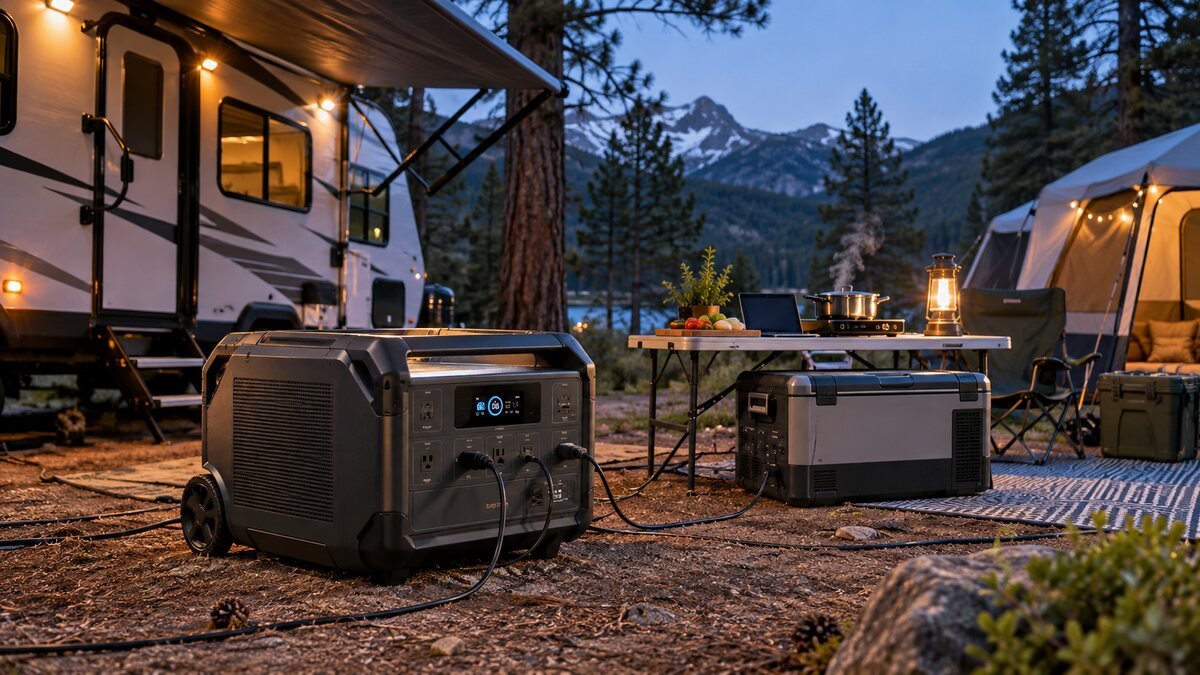
The EF ECOFLOW DELTA Pro 3 is closer to a movable home battery than a conventional camping power box. It combines 4096Wh of LiFePO4 storage, 4000W of continuous AC output, 120V and 240V capability, multiple charging methods, and an expandable ecosystem. Those features make it relevant for RV owners, off-grid cabins, vehicle-accessible base camps, mobile professionals, and households preparing for outages. This EcoFlow DELTA Pro 3 review explains its capabilities, practical limitations, and ideal uses without treating laboratory ratings as guaranteed real-world runtime.
EcoFlow DELTA Pro 3 specifications
- Battery capacity: 4096Wh
- Battery chemistry: LiFePO4 (LFP)
- Rated AC output: 4000W
- Surge output: up to 8000W
- X-Boost: supports selected loads up to approximately 6000W
- Voltage: 120V and 240V output capability
- Solar input: up to 2600W under supported conditions
- Cycle life: approximately 4,000 cycles to 80% capacity
- UPS transfer: approximately 10ms for supported equipment
- Weight: approximately 113.5 lb (51.5 kg)
These numbers describe a high-capacity system, not a lightweight accessory. Wheels and a telescoping handle make movement across a firm surface easier, but loading more than 100 pounds into a vehicle or carrying it on stairs may require two people. It is appropriate for an RV, garage, cabin, or established campsite—not backpacking.
What does 4096Wh mean in practice?
A 4kWh-class battery can operate many campsite essentials for meaningful periods. Refrigeration, lighting, communications, laptops, fans, cameras, and cooking equipment can all fit within a carefully planned energy budget. During an outage, it may support selected household appliances and electronics.
Usable energy at an outlet is lower than the battery’s nameplate capacity because the inverter and internal electronics consume energy. Temperature, battery condition, standby time, and device cycling also matter. Estimate runtime by dividing realistically usable watt-hours by average load wattage, then keep a reserve. Heating and cooling appliances can exhaust even a large battery surprisingly quickly.
4000W output, surge power, and X-Boost
The 4000W continuous output can support multiple moderate appliances or a demanding individual load when total demand remains within the rating. The 8000W surge figure is intended for brief startup spikes from motors and compressors; it is not a continuous-output specification.
X-Boost can help selected appliances rated up to about 6000W operate by adjusting voltage. It does not transform the station into a standard 6000W continuous generator. Sensitive electronics and devices requiring exact voltage may not be suitable for X-Boost. Always check appliance specifications and EcoFlow’s compatibility guidance.
Why 120V and 240V capability matters
Unlike many portable stations limited to ordinary 120V outlets, the DELTA Pro 3 can support both 120V and 240V applications through the appropriate connections. This broadens its usefulness for RV systems and selected home-backup equipment. It does not eliminate the need for correct installation.
Connecting a power station to household circuits requires compatible transfer equipment and qualified electrical work. Never improvise a backfeed connection. The correct design depends on the circuits, voltage, peak loads, local codes, and the EcoFlow accessories being used.
Charging and solar input
The DELTA Pro 3 supports several charging sources, including AC power, compatible solar arrays, and selected vehicle or generator accessories. Official information lists solar input up to 2600W when the array meets the supported electrical limits. That is substantial enough to make solar useful for long outages and off-grid stays.
Maximum solar input is not guaranteed throughout the day. Clouds, shade, panel temperature, orientation, cable losses, and seasonal sunlight reduce production. Owners should compare realistic daily solar harvest with expected daily consumption. An array that easily sustains refrigeration and electronics may still struggle to replace energy used by electric heat or air conditioning.
LFP battery life and safety
EcoFlow rates the battery for approximately 4,000 cycles before it reaches 80% of original capacity under specified conditions. Reaching that point does not mean the unit stops working; runtime gradually becomes shorter. LiFePO4 chemistry is valued for cycle life and thermal stability, making it appropriate for equipment expected to serve regularly.
Owners must still keep ventilation openings clear, protect the unit from direct rain and standing water, and follow the specified charging and storage temperatures. The power station should not operate inside a sealed compartment where heat cannot escape.
Expandable capacity
The base station provides 4096Wh. Compatible extra batteries can expand an individual setup, while broader EcoFlow configurations can scale much further when multiple power stations and home-backup components are combined. Marketing figures for the full ecosystem should not be mistaken for the capacity of one standalone unit.
Expansion can extend outage coverage, but every battery adds cost, weight, charging time, and storage requirements. Before buying extras, calculate which loads are truly essential and how long they must operate.
UPS function and app control
The approximately 10ms transfer capability can provide fast backup for compatible electronics when grid power fails. This can be useful for routers, computers, and selected household equipment, but it is not a medical-grade UPS. Devices with strict power requirements should be checked individually.
The EcoFlow app allows users to monitor energy flow, battery level, and settings through supported wireless connections. It is particularly useful when the station is installed in an RV compartment or backup area, while the onboard display keeps essential information available without a phone.
Best uses for the DELTA Pro 3
- RV travel with demanding electrical equipment
- Vehicle-accessible family camps and off-grid cabins
- Emergency backup for selected household circuits
- Mobile workshops, events, and professional equipment
- Expandable solar-energy systems requiring 120V/240V flexibility
Pros and cons
Pros
- Large 4096Wh base capacity
- Powerful 4000W continuous output
- 120V and 240V capability
- Long-life LiFePO4 cells
- Up to 2600W supported solar input
- Expandable ecosystem and app monitoring
- Fast UPS transfer for compatible devices
Cons
- Approximately 113.5 pounds and difficult to lift
- Premium price and costly accessories
- Whole-home connection may require professional installation
- High-demand appliances can still drain 4kWh quickly
- Solar performance depends on conditions and array design
Who should buy it?
The DELTA Pro 3 is best for buyers who genuinely need high output, 240V capability, and several kilowatt-hours of portable storage. RV owners, prepared households, cabin users, and mobile professionals can benefit from its flexibility. Casual campers who only charge phones and run lights will find it unnecessarily heavy and expensive.
Final verdict
The EF ECOFLOW DELTA Pro 3 delivers serious energy capacity and output in a movable format. Its 4096Wh LFP battery, 4000W inverter, 120V/240V support, solar capability, and expansion options make it a strong candidate for RV power and planned home backup. The tradeoffs are equally serious: weight, cost, and the need for thoughtful system design. For users who need its capabilities and have a practical place to install or transport it, the DELTA Pro 3 is far more versatile than a typical camping station.
Leave a Reply
You must be logged in to post a comment.