

Disclosure: As an Amazon Associate, 1WayCamping may earn from qualifying purchases made through links in this article, at no extra cost to you.
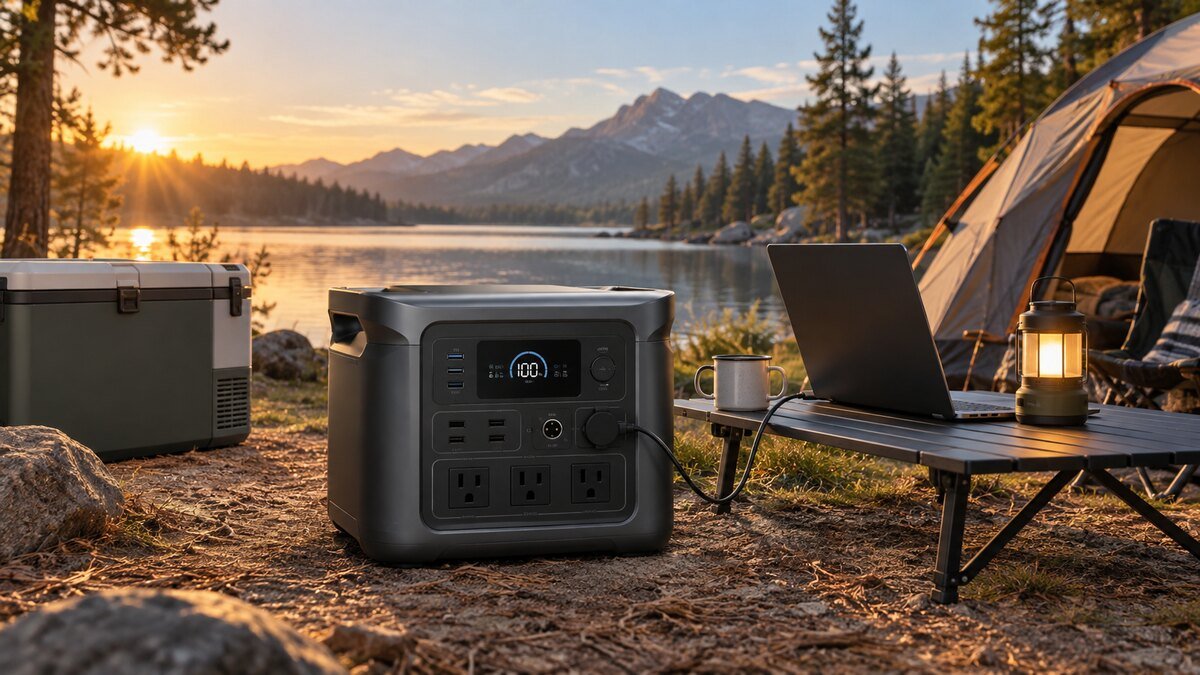
If you need dependable off-grid power without moving into the largest and heaviest class of portable batteries, the EF ECOFLOW DELTA 3 Classic deserves a close look. This 1024Wh LiFePO4 power station combines a useful amount of stored energy with 1800W of continuous AC output, fast wall charging, solar compatibility, and a 10ms UPS function. In this EcoFlow DELTA 3 Classic review, we examine what those numbers mean for camping, RV travel, emergency backup, and everyday portable power.
EcoFlow DELTA 3 Classic specifications
- Battery capacity: 1024Wh
- Battery chemistry: LiFePO4 (LFP)
- AC output: 1800W continuous
- Surge output: up to 3600W
- X-Boost: supports suitable resistive appliances up to approximately 2600W
- UPS transfer time: 10ms
- USB-C output: up to 100W
- Weight: approximately 26.7 lb (12.1 kg)
- Dimensions: approximately 15.7 × 7.9 × 11.1 inches
- Charging: AC, vehicle, and compatible solar input
These specifications place the unit in a versatile middle category. It is substantially more capable than a small battery intended only for phones and lights, while remaining more manageable than high-capacity home-backup systems. The weight makes it best for car camping, an RV, a cabin, or emergency use at home—not for carrying in a backpack.
How useful is the 1024Wh capacity?
A 1024Wh rating gives families enough flexibility to run several campsite essentials, including LED lighting, phones, cameras, a laptop, a fan, or a portable refrigerator. Actual runtime always depends on the device, temperature, battery state, and conversion losses. For that reason, shoppers should avoid treating the rated capacity as fully usable energy at every outlet.
A practical way to estimate runtime is to divide usable watt-hours by an appliance’s average wattage, then allow a margin for system losses. A 50W device can operate far longer than a 1000W appliance, and equipment with compressors or heating elements may draw extra power when starting. Check the appliance label before connecting it.
1800W output, surge power, and X-Boost
The 1800W continuous AC rating is one of the DELTA 3 Classic’s strongest features. It can handle many common camping and household devices as long as their combined continuous demand stays within the rated limit. The 3600W surge figure helps with short startup loads, but it should not be confused with continuous output.
EcoFlow also advertises X-Boost support for suitable resistive appliances drawing up to about 2600W. X-Boost adjusts voltage so certain devices can keep operating, but it does not turn the station into a normal 2600W continuous power source. Sensitive electronics and appliances that require exact voltage may not be appropriate for this mode. Always follow both manufacturers’ instructions.
Fast charging and solar capability
Under supported conditions, EcoFlow states that AC charging can reach roughly 80% in about 45 minutes and a full charge in around one hour. That speed is convenient when preparing for a trip or recharging during a brief stop. Charging time can vary with temperature, the selected settings, available power, and the battery’s condition.
Solar input adds flexibility for longer stays away from outlets. A compatible solar panel is normally optional, and real-world solar performance depends heavily on panel wattage, sun angle, clouds, shade, and temperature. Buyers should match the panel and connectors to the power station’s supported input specifications rather than assuming any panel will deliver the advertised maximum.
LiFePO4 battery and everyday usability
The LiFePO4 battery chemistry is a meaningful advantage for frequent users. LFP batteries are generally valued for long cycle life and thermal stability. The built-in battery management system still matters: keep ventilation openings clear, avoid moisture, and store the unit according to EcoFlow’s temperature and maintenance guidance.
A 100W USB-C port can charge many modern laptops without occupying an AC outlet. App control also helps users monitor input, output, and settings from a phone. These details make the station easier to manage when several people are sharing power at a campsite.
Can it work as an emergency UPS?
The advertised 10ms transfer time allows the DELTA 3 Classic to provide fast backup when utility power fails. That can be useful for compatible routers, computers, and other selected devices. However, it is not a medical-grade UPS, and equipment with exceptionally strict power requirements should be checked for compatibility before relying on it.
Best camping uses
- Car camping trips that need refrigeration, lighting, and device charging
- RV travel as a portable supplement to the vehicle’s electrical system
- Tailgating, outdoor work, photography, and mobile offices
- Short home outages involving communications and selected essentials
- Cabins or base camps with compatible solar recharging
At about 26.7 pounds, it is portable in the sense that one person can relocate it, but most campers will not want to carry it far from a vehicle. Its ideal setting is a fixed campsite where the higher output and capacity matter more than ultralight mobility.
Pros and cons
Pros
- Useful 1024Wh capacity for camping and backup essentials
- Strong 1800W continuous AC output
- Fast AC recharge under supported conditions
- LiFePO4 battery chemistry
- 10ms UPS function and app monitoring
- Optional solar charging for off-grid use
Cons
- Too heavy for backpacking
- Solar panels may cost extra
- High-wattage appliances can drain 1024Wh quickly
- X-Boost is not equivalent to full 2600W continuous output
- Runtime varies and should be calculated for each appliance
Who should buy it?
The DELTA 3 Classic is best for campers who want enough output for appliances and enough capacity for a weekend setup, but do not need an enormous expandable home-energy system. It also suits RV owners and households seeking a portable backup for selected essentials. Backpackers, occasional phone-only users, and anyone needing multi-day air-conditioning may be better served by a smaller or much larger solution.
Final verdict
The EF ECOFLOW DELTA 3 Classic offers a balanced combination of 1024Wh capacity, 1800W continuous output, fast charging, LFP battery chemistry, and practical connectivity. Its strongest role is powering a well-equipped car campsite or providing short-duration backup at home. The main tradeoffs are its 26.7-pound weight and the limited runtime that any 1kWh-class station has with energy-hungry appliances. Buyers who understand those limits will find it a capable and flexible portable power station.
Leave a Reply
You must be logged in to post a comment.