

Disclosure: As an Amazon Associate, 1WAYCAMPING may earn a commission from qualifying purchases at no additional cost to you.
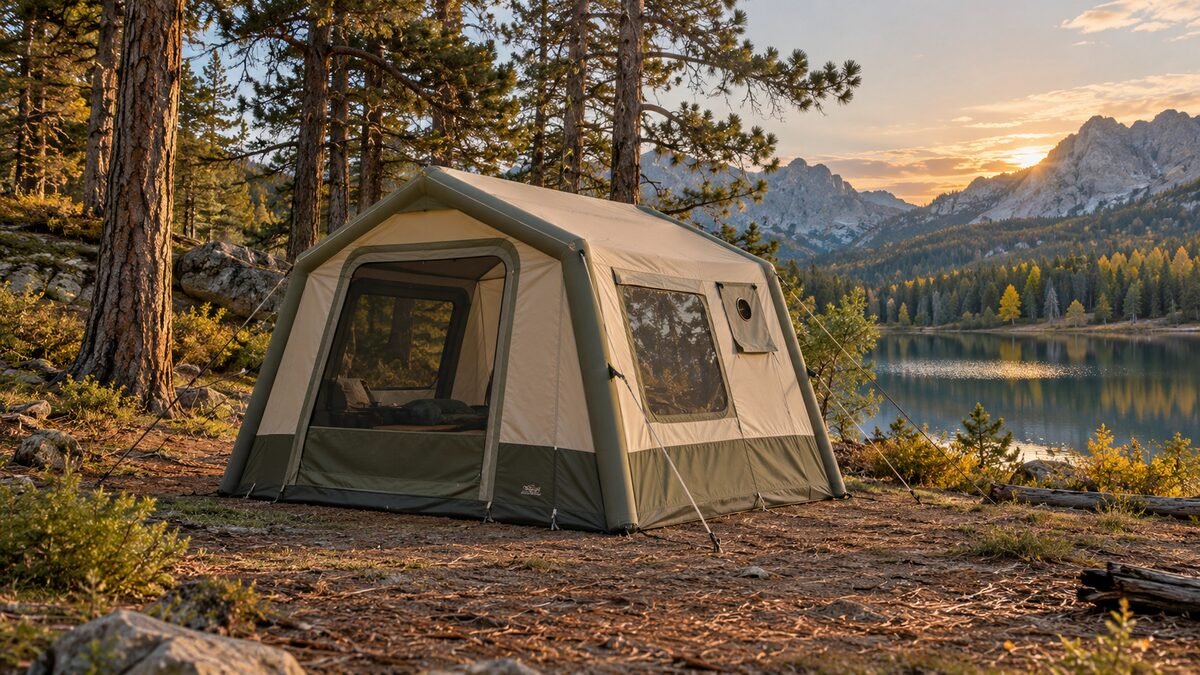
The NANJEEN Luxury Inflatable Camping Tent is designed for campers who want a compact glamping-style shelter without assembling a traditional pole frame. According to the current Amazon listing, this one- to two-person model combines an inflatable air-beam structure, rugged 600D Oxford fabric, a supplied pump, and a stove-jack opening.
Those features make it an interesting option for couples, solo campers who value interior space, and cold-weather base camps. However, it is not an ultralight backpacking tent, and buyers should understand the limitations of heavy fabric, inflatable supports, and stove use before ordering.
NANJEEN Inflatable Tent at a Glance
- Advertised capacity: one to two people
- Structure: inflatable air-beam frame
- Main listed fabric: 600D Oxford
- Setup claim: approximately five minutes
- Included accessory: inflation pump
- Special feature: stove-jack opening
- Best suited to: car camping, compact glamping, and stationary camps
Product specifications, included components, color, price, and availability can change. Verify the selected Amazon variation before purchasing.
Who Is This Tent Designed For?
This model makes the most sense for one or two campers who drive close to their campsite and want more of a small cabin experience than a conventional low-profile dome. The tall air-beam shape and fabric walls are intended to create a comfortable living area for sleeping, changing clothes, or relaxing during poor weather.
It may also appeal to campers interested in shoulder-season trips because the listing includes a stove jack. That feature does not automatically make any tent safe for every stove or every condition. Correct clearances, ventilation, heat-resistant components, carbon-monoxide precautions, and the tent and stove manufacturers’ instructions remain essential.
Inflatable Air-Beam Setup
Instead of connecting rigid poles, the NANJEEN tent uses inflatable beams that form the shelter when pressurized with the included pump. This can simplify the sequence: unfold the tent, locate the valves, inflate the structure, position it correctly, then secure every stake and guyline.
The listing promotes a setup time of about five minutes, but real setup time will depend on familiarity, ground conditions, wind, and whether one or two people are working. Inflation is only one part of pitching the tent. Proper staking, guyline tension, door alignment, and weather preparation still require attention.
Advantages of Air Beams
- No long rigid poles to sort or connect.
- The structure can be forgiving during assembly.
- Setup may be manageable for one camper after practice.
- Air beams cannot permanently bend in the same way as metal poles.
Possible Drawbacks
- The pump becomes an essential piece of equipment.
- Valves and air chambers should be inspected before each trip.
- Pressure may need adjustment when temperatures change.
- Repairs may be less familiar than replacing a conventional pole section.
600D Oxford Fabric: Durability Versus Weight
600D Oxford is a heavier woven material commonly chosen for abrasion resistance and a substantial feel. In a camping shelter, it can provide a more enclosed, cabin-like environment than large areas of lightweight mesh. The tradeoff is bulk. This fabric is one reason the NANJEEN should be viewed as a car-camping shelter rather than equipment for long-distance backpacking.
Fabric denier alone does not prove complete waterproof performance. Seam construction, coatings, zippers, windows, the floor, and the way the tent is pitched all affect protection. Before a serious trip, test the fully pitched tent with the recommended weather configuration and keep gear away from the walls.
Interior Space and Comfort
A capacity of one to two people should be interpreted realistically. Two adults may fit for sleeping, but comfort depends on mattress dimensions and the amount of equipment stored inside. Solo use should provide more room for clothing, a chair, or organized gear. Couples using a wide mattress should compare the exact current floor measurements with their sleep system before buying.
The cabin-style profile can offer better usable height near the walls than a small dome. Large windows can improve daylight and airflow, while privacy panels make the interior more practical at developed campgrounds. For wet trips, plan a specific place for muddy footwear so the floor remains manageable.
Ventilation and Condensation
Heavier, more enclosed tents require deliberate ventilation. Moisture from breathing, damp clothing, and temperature differences can condense on cool interior surfaces. Open protected vents and windows whenever conditions allow, maintain airflow around sleeping gear, and never confuse condensation with a fabric leak without examining the source.
Ventilation becomes even more important if a compatible stove is used. A stove jack is only an exit point for a chimney; it is not a complete safety system. Never operate combustion equipment in a closed shelter, and use a carbon-monoxide alarm rated for the intended environment.
Understanding the Stove Jack
The stove-jack feature is likely to attract cold-weather campers, but it demands the most caution. Confirm that the installed jack material, opening size, chimney diameter, spark protection, stove placement, and clearances are compatible. Place the stove on a stable heat-resistant surface and prevent people or bedding from contacting hot equipment.
Local fire restrictions and campground rules may prohibit tent stoves even when a shelter is designed to accept one. Check current regulations before traveling. If you do not plan to use a stove, make sure the jack closes securely against rain and drafts.
Weather and Wind Considerations
The listing describes the tent as waterproof and windproof, but no portable shelter is immune to severe weather. A tall inflatable cabin has more surface area exposed to wind than a low dome. Use all designated stakes and guylines, orient the narrowest practical side toward expected wind, and choose a protected campsite away from dead branches and drainage channels.
Do not rely on an inflatable tent as a severe-storm shelter. Monitor forecasts and have an evacuation plan. Snow accumulation can also overload a structure unless the manufacturer explicitly provides a supported snow-load rating.
Portability and Storage
The combination of 600D fabric, air chambers, valves, and a pump is likely to create a larger package than a standard one- or two-person tent. Buyers should verify current packed dimensions and weight, then measure the available trunk and home storage area. The tent must be completely clean and dry before long-term storage to reduce odor, mildew, and coating damage.
Pros and Cons
Pros
- Air-beam design eliminates conventional pole assembly.
- Included pump supports the advertised quick setup system.
- 600D Oxford fabric gives the shelter a substantial glamping-style feel.
- Cabin profile may provide useful standing and living space.
- Stove-jack opening expands potential cool-weather use when handled safely.
Cons
- Not suitable for lightweight backpacking.
- Limited to one or two campers despite its cabin appearance.
- Pump, valves, and air pressure add maintenance considerations.
- Heavy fabric may require more drying time after rain.
- Safe stove use requires additional equipment, knowledge, and careful compliance.
NANJEEN Inflatable Tent Versus a Traditional Tent
A traditional two-person dome will usually be lighter, smaller when packed, and easier to carry away from a vehicle. The NANJEEN prioritizes living comfort, substantial fabric, and a pole-free setup experience. It is the stronger match when the campsite is accessible by car and the shelter will remain pitched for several nights.
If you are still deciding which structure fits your needs, read our guide on how to choose a tent for camping. Although this NANJEEN is intended for one or two people, the same principles of usable space, ventilation, weather protection, setup, and packed size apply.
Is the NANJEEN Luxury Inflatable Camping Tent Worth It?
The NANJEEN Luxury Inflatable Camping Tent appears best for a solo camper or couple seeking a compact glamping base camp with fast inflation and heavier fabric. Its strongest selling points are the air-beam frame, supplied pump, cabin-style comfort, and stove-jack option.
It is less attractive for hikers, frequent campsite changes, or anyone who wants the smallest possible packed shelter. Before purchasing, verify the current dimensions, weight, waterproofing details, warranty, repair kit, and exact contents of the selected variation.
Leave a Reply
You must be logged in to post a comment.