

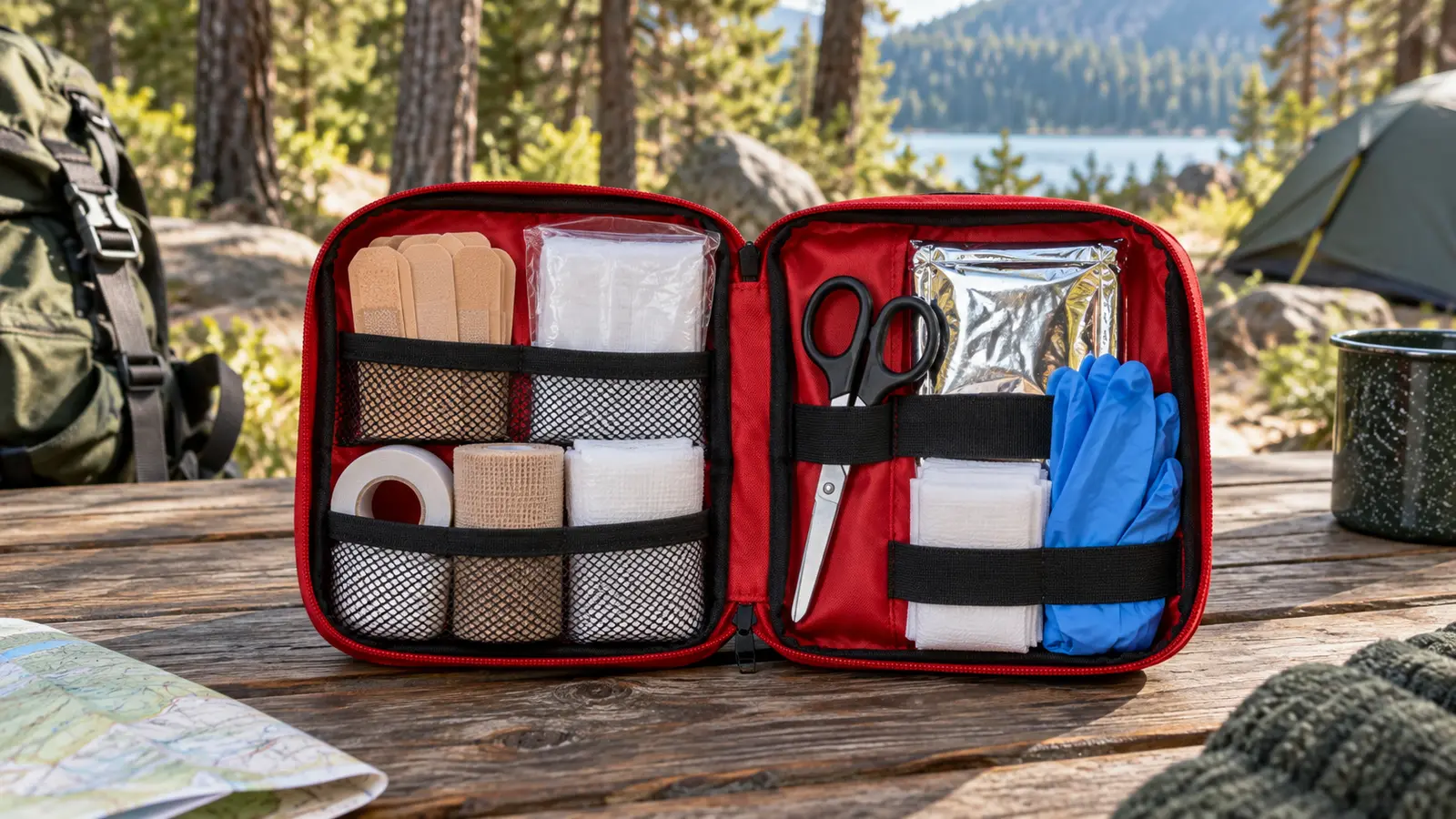
When you’re spending time outdoors, preparation is just as important as having the right camping gear.
A beautiful camping trip can quickly become stressful when someone gets a cut, develops a blister, suffers a minor burn, twists an ankle, or encounters another unexpected problem.
That’s why carrying a reliable Survival and First Aid Kit should be part of your outdoor preparation.
A first aid kit isn’t only for serious emergencies. It can also help you deal with the small injuries and problems that commonly happen during camping, hiking, backpacking, road trips, and other outdoor adventures.
The best kit is one that is easy to carry, organized, appropriate for your activities, and stocked with supplies you know how to use.
In this guide, we’ll explain what to look for in a camping first aid kit, what supplies are useful, how to organize your emergency gear, and how to prepare for unexpected situations outdoors.
What Is a Survival and First Aid Kit?
A Survival and First Aid Kit combines basic medical supplies with useful emergency and outdoor equipment.
A traditional first aid kit primarily focuses on treating minor injuries.
A survival kit can go further by including equipment that may help you manage unexpected outdoor situations.
Depending on your needs, a combined kit may include:
- Adhesive bandages
- Gauze
- Medical tape
- Antiseptic supplies
- Disposable gloves
- Tweezers
- Scissors
- Emergency blanket
- Flashlight
- Whistle
- Emergency supplies
- Basic survival tools
The exact contents should depend on your destination, group size, activities, and level of medical training.
A compact kit for a short day hike will be very different from the equipment required for a multi-day wilderness trip.
Why Carry a First Aid Kit While Camping?
Camping takes you away from immediate access to medical services.
Even when you’re only a few miles from civilization, a minor injury can become inconvenient if you don’t have basic supplies available.
Common outdoor problems include:
- Cuts
- Scrapes
- Blisters
- Minor burns
- Splinters
- Insect bites
- Sprains
- Headaches
- Sunburn
- Minor allergic reactions
A basic camping first aid kit allows you to address many minor issues quickly while deciding whether additional medical assistance is necessary.
The purpose of a first aid kit isn’t to replace professional medical care.
Instead, it provides basic supplies for initial care.
What Should Be in a Camping First Aid Kit?
The contents of the best first aid kit depend on your adventure.
However, several categories of supplies are useful for most campers.
Adhesive Bandages
Different sizes can help cover small cuts, scrapes, and blisters.
It’s useful to carry more than one size because outdoor injuries aren’t always predictable.
Sterile Gauze
Gauze can be useful for covering larger wounds or controlling bleeding while additional medical care is obtained.
Medical Tape
Medical tape can help secure dressings and gauze.
Antiseptic Supplies
Appropriate wound-cleaning supplies can help clean minor injuries.
Always follow the instructions on the product you’re using.
Disposable Gloves
Gloves can provide a basic barrier when helping another person with an injury.
Tweezers
Tweezers can be useful for removing small splinters or other superficial foreign material when appropriate.
Scissors
Small medical scissors can be useful for cutting tape, dressings, or clothing when necessary.
Emergency Blanket
An emergency blanket is lightweight and can be useful in situations involving unexpected exposure to cold.
Survival First Aid for Outdoor Adventures
Survival first aid is different from simply carrying a box of bandages.
In a wilderness situation, you may have to manage an injury while waiting for help or while making your way back to safety.
That means preparation should include both equipment and knowledge.
Before heading into remote areas, learn basic first aid skills such as:
- How to control minor bleeding
- How to clean and cover wounds
- How to recognize signs of serious injury
- How to respond to sprains
- How to manage blisters
- How to recognize heat-related problems
- How to recognize cold-related problems
- When to seek professional medical assistance
A well-stocked kit is valuable, but knowing how to use it is even more important.
First Aid for Hiking
Hiking creates its own set of potential problems.
Long distances, uneven terrain, changing weather, and exposure can increase the likelihood of minor injuries.
A hiking first aid kit should ideally be lightweight while containing the supplies most relevant to your trip.
For a day hike, consider carrying:
- Bandages
- Gauze
- Medical tape
- Blister care
- Antiseptic supplies
- Gloves
- Tweezers
- Small scissors
- Emergency blanket
- Personal medications
For longer or more remote hikes, you may want a more comprehensive outdoor first aid kit.
First Aid for Blisters
Blisters are among the most common problems hikers encounter.
They can turn a comfortable hike into a painful experience very quickly.
To reduce the risk of blisters:
- Wear properly fitting footwear
- Break in new hiking shoes gradually
- Keep feet as dry as practical
- Address hot spots early
- Use appropriate socks
- Carry blister-care supplies
If you feel a hot spot developing during a hike, stop and address it rather than continuing until it becomes a painful blister.
First Aid for Minor Cuts and Scrapes
Small cuts and scrapes are common when camping.
Branches, rocks, tools, cooking equipment, and other objects can cause minor injuries.
For a minor wound, basic first aid generally involves cleaning the area and protecting it with an appropriate dressing.
Keep your supplies clean and follow the instructions for any wound-care products you carry.
If a wound is deep, heavily bleeding, contaminated, or otherwise concerning, seek professional medical attention rather than relying on a basic camping kit.
Survival Snake Bite: What Should You Do?
Snake encounters are a concern in some outdoor environments.
If someone is bitten by a snake, the priority is to seek emergency medical help as quickly as possible.
Do not rely on improvised methods or attempt to treat the bite using dangerous techniques.
Depending on your location, emergency services may provide specific instructions while help is on the way.
Important steps can include:
- Move away from the snake
- Keep the person as calm as possible
- Minimize unnecessary movement
- Seek emergency medical assistance
- Follow instructions from emergency professionals
Do not attempt to capture or handle the snake.
If it can be safely observed from a distance, noting its appearance may help medical professionals, but personal safety comes first.
A first aid kit cannot substitute for professional treatment of a potentially serious snake bite.
Emergency Aid During Camping
A good emergency aid strategy begins before the trip.
Before leaving home, consider:
Where Are You Going?
Research the environment and potential hazards.
How Remote Is the Location?
The farther you are from medical services, the more important preparation becomes.
What Activities Are You Doing?
Hiking, fishing, climbing, boating, and camping can present different risks.
What Is the Weather?
Heat, cold, storms, and rain can affect what equipment you should carry.
Who Is Going?
Children, older adults, and people with specific personal needs may require additional preparation.
Good planning helps you build a kit around the actual trip rather than carrying random supplies.
Travel Emergency Kit
A travel emergency kit can be smaller than a comprehensive wilderness kit while still providing useful supplies.
For road trips and travel, consider including:
- Adhesive bandages
- Gauze
- Medical tape
- Antiseptic supplies
- Disposable gloves
- Tweezers
- Emergency blanket
- Flashlight
- Whistle
- Personal medications
- Copies of important medical information when appropriate
Keep your kit somewhere accessible rather than buried underneath all your luggage.
During a vehicle emergency, easy access can make a big difference.
Camping Tools & Accessories for Emergency Preparedness
A first aid kit is only one component of a complete outdoor preparedness system.
Other useful Camping Tools & Accessories may include:
Flashlight or Headlamp
Essential for navigating after dark and useful during emergencies.
Whistle
A whistle can help attract attention if you’re lost or need assistance.
Emergency Blanket
Useful for unexpected exposure to cold.
Fire-Starting Equipment
A reliable fire-starting method can be useful in appropriate outdoor situations.
Navigation Equipment
A map and compass can provide backup navigation capabilities.
Power Bank
A charged power bank can help maintain communication devices.
Water Filtration
A suitable water filtration system can provide an additional water-management option during longer outdoor trips.
Multi-Purpose Tool
A compact tool can help with certain outdoor tasks.
The goal is to build a balanced emergency system rather than simply filling your backpack with equipment.
How to Choose the Best First Aid Kit for Camping
There are many first aid kits available, but the largest kit isn’t necessarily the best one.
Look for these features.
Size
A kit should be large enough to contain the supplies you actually need while remaining easy to carry.
Organization
Individual compartments can make it easier to locate supplies quickly.
Durability
Outdoor kits should be able to handle normal travel and camping conditions.
Waterproof Protection
Moisture can damage certain medical supplies.
A water-resistant or waterproof case can be useful for outdoor environments.
Weight
Backpackers should pay particular attention to weight.
A huge first aid kit may contain supplies you’ll never use while adding unnecessary weight to your pack.
Personal Needs
If you regularly use specific medications or medical supplies, your personal kit may need to include them.
First Aid Kit for Family Camping
Family camping trips may require a larger kit because more people means more potential needs.
A family kit may include:
- Multiple sizes of bandages
- Extra gauze
- Blister supplies
- Gloves
- Antiseptic supplies
- Tweezers
- Scissors
- Emergency blanket
- Personal medications
- Children’s appropriate supplies when needed
Keep the kit somewhere adults can access quickly but young children cannot use unsupervised.
First Aid Kit for Backpacking
Backpackers need to balance preparedness with weight.
Every extra ounce matters when you’re walking many miles.
A minimalist backpacking first aid kit might focus on:
- Wound care
- Blister treatment
- Basic bandages
- Gauze
- Medical tape
- Gloves
- Personal medications
- Emergency blanket
For remote trips, consider additional supplies based on the environment and your training.
The key is to prepare for realistic risks rather than trying to carry a complete medical clinic in your backpack.
Survival Medic: Why Training Matters
Equipment alone does not make someone prepared.
The phrase survival medic can sometimes make emergency care sound more advanced than it really is.
In reality, effective emergency response starts with basic knowledge.
Consider taking a recognized first aid or CPR course.
For people who regularly travel into remote environments, wilderness first aid training may also be worth considering.
Training can help you understand:
- How to assess an emergency
- When to call for help
- How to control bleeding
- How to protect an injured person
- How to communicate with emergency services
- How to evacuate safely
Your kit is a tool.
Training teaches you how to use it.
Health First Emergency Preparedness
Emergency preparedness should include more than injuries.
Outdoor health problems can include:
- Dehydration
- Heat exhaustion
- Heat-related illness
- Hypothermia
- Allergic reactions
- Insect-related problems
- Fatigue
- Sun exposure
Before a trip, check the weather forecast and plan your clothing, hydration, food, and route accordingly.
If someone develops severe symptoms or you suspect a serious medical emergency, seek professional medical help immediately.
How to Store Your First Aid Kit
Where you store your kit matters.
Keep it:
Accessible
You should be able to reach it quickly.
Organized
Know where the important supplies are.
Protected
Keep moisture and dirt away from medical supplies.
Clearly labeled
A visible first aid label can help others find it quickly.
For vehicles, keep an emergency kit in an easily accessible location.
For hiking, store your first aid kit inside your backpack where it can be reached without removing every piece of equipment.
How Often Should You Check a First Aid Kit?
Your first aid kit shouldn’t be packed once and forgotten.
Check it periodically.
Look for:
- Expired products
- Damaged packaging
- Missing supplies
- Used bandages
- Empty medication containers
- Damaged equipment
Before every major camping trip, do a quick inventory.
Replace anything that has been used or damaged.
Should You Build Your Own First Aid Kit or Buy One?
Both approaches can work.
Pre-Made Kit
Advantages:
- Convenient
- Already organized
- Easy to purchase
- Often compact
Disadvantages:
- May contain supplies you don’t need
- May not include everything you want
- Quality varies between products
DIY First Aid Kit
Advantages:
- Completely customizable
- You choose every item
- Easy to adapt to your activities
- Can eliminate unnecessary items
Disadvantages:
- Requires more planning
- You need to purchase and organize everything
- Easier to forget important categories
A good strategy is to start with a quality pre-made kit and customize it according to your activities and personal needs.
Everlit and Surviveware First Aid Kits
When researching emergency equipment, you may encounter brands such as Everlit and Surviveware.
These brands offer products aimed at emergency preparedness and first aid.
Rather than choosing a kit simply because of its brand name, compare:
- Contents
- Organization
- Size
- Weight
- Materials
- Intended use
- Medical supplies included
A kit designed for home emergency preparedness may be very different from one designed specifically for backpacking.
What Makes the Best First Aid Kit?
The best first aid kit isn’t necessarily the biggest.
It’s the kit that matches your adventure.
For day hiking:
Lightweight + basic wound care
For family camping:
More supplies + organization
For backpacking:
Minimal weight + essential treatment supplies
For vehicle travel:
Larger capacity + comprehensive emergency supplies
For remote wilderness trips:
More advanced preparation + appropriate training
Think about the environment first and the product second.
Survival and First Aid Kit Checklist
Before your next outdoor adventure, consider this basic checklist:
First Aid
- Adhesive bandages
- Gauze
- Medical tape
- Antiseptic supplies
- Disposable gloves
- Tweezers
- Scissors
- Blister care
- Personal medications
Emergency Equipment
- Emergency blanket
- Flashlight or headlamp
- Whistle
- Communication device
- Power bank
- Navigation equipment
Camping Essentials
- Water
- Food
- Weather-appropriate clothing
- Fire-starting equipment
- Shelter
- Appropriate camping tools
The exact list should be adapted to your destination and activity.
Final Verdict: Survival and First Aid Kit
A Survival and First Aid Kit is one of the most useful pieces of equipment you can add to your camping and hiking gear.
You don’t need an enormous kit filled with equipment you’ll never use.
Instead, focus on the supplies that match your activities, environment, group size, and level of training.
For a short hike, a lightweight first aid kit may be sufficient.
Family camping, you may want additional supplies and emergency equipment.
Backpacking and remote adventures, minimizing weight while maintaining essential capabilities becomes especially important.
And regardless of the kit you choose, remember that knowledge is part of your emergency equipment.
Learning basic first aid, knowing your environment, carrying appropriate communication equipment, and understanding when professional medical assistance is required can be just as important as the contents of your bag.
A well-prepared camper doesn’t expect something to go wrong.
They simply make sure they’re ready if it does.
With the right Survival and First Aid Kit, proper planning, and basic emergency knowledge, you can enjoy your next camping or hiking adventure with greater confidence and preparedness.
Leave a Reply
You must be logged in to post a comment.